

Ontario changed everything for Canadian sports betting. When the province launched its competitive iGaming market on April 4, 2022, it became the first jurisdiction in Canada to allow private sportsbooks to operate alongside government-run options. What followed was an explosion of choice that transformed how Ontarians bet on sports, and frankly, set the standard for what other provinces are now scrambling to replicate.
The numbers tell the story better than any press release. As of late 2025, Ontario’s iGaming market features approximately 48 licensed operators running over 80 gaming websites. The province recorded $69.6 billion in total wagers during fiscal year 2024-25, generating $3.2 billion in gross gaming revenue — a 32% increase year-over-year. Single-event sports betting alone accounted for billions in handle, with November 2025 seeing over $9.33 billion in total cash wagers. These figures make Ontario one of the largest regulated online gambling markets in North America, rivaling established US states like New Jersey and Pennsylvania.
Understanding how Ontario’s betting ecosystem works requires knowing two organizations that sometimes confuse newcomers: the Alcohol and Gaming Commission of Ontario and iGaming Ontario. The AGCO functions as the regulator, establishing standards, issuing licenses, and enforcing compliance. Think of them as the referee who sets the rules and calls fouls. iGaming Ontario, meanwhile, operates as the conduct and management body responsible for the commercial side. Following the iGaming Ontario Act of 2024, iGO became an independent Crown agency in May 2025, now reporting directly to the Ministry of Tourism, Culture and Sport. This separation resolved longstanding governance concerns by clearly dividing who makes the rules from who manages the business relationships with operators.
How the Ontario Licensing System Works
Getting licensed to operate in Ontario is neither quick nor cheap. Operators must register with the AGCO and execute a commercial operating agreement with iGO. The base licensing cost starts at CAD $100,000 per gaming site annually, with additional expenses for investigations, compliance infrastructure, and ongoing regulatory requirements. The province taxes iGaming and sports betting at 22.5% of gross gaming revenue, which operators factor into their odds and promotions.
The regulatory framework demands rigorous standards that operators must meet before taking a single bet. Cybersecurity policies require documented incident response planning and regular penetration testing. Anti-money laundering systems must include Know Your Customer verification, transaction monitoring, and suspicious activity reporting aligned with federal requirements. Player protection measures mandate self-exclusion tools, deposit limits, reality checks, and access to problem gambling resources. The AGCO updated these standards in early 2025, increasing emphasis on documentation and auditability across all areas. Operators face active scrutiny during audits and license renewals, particularly regarding IT systems, ownership structures, and third-party vendors.
What distinguishes Ontario from other Canadian provinces is the open-market model. There is no cap on the number of licenses available. Any operator meeting the regulatory standards can apply, regardless of whether they previously operated offshore. This approach attracted major international brands that had been serving Canadians through grey-market channels for years. When the regulated market launched, companies like bet365, FanDuel, BetMGM, and DraftKings immediately registered with the AGCO and entered the marketplace legally. The result is genuine competition that benefits bettors through better odds, more generous promotions, and improved platform quality.
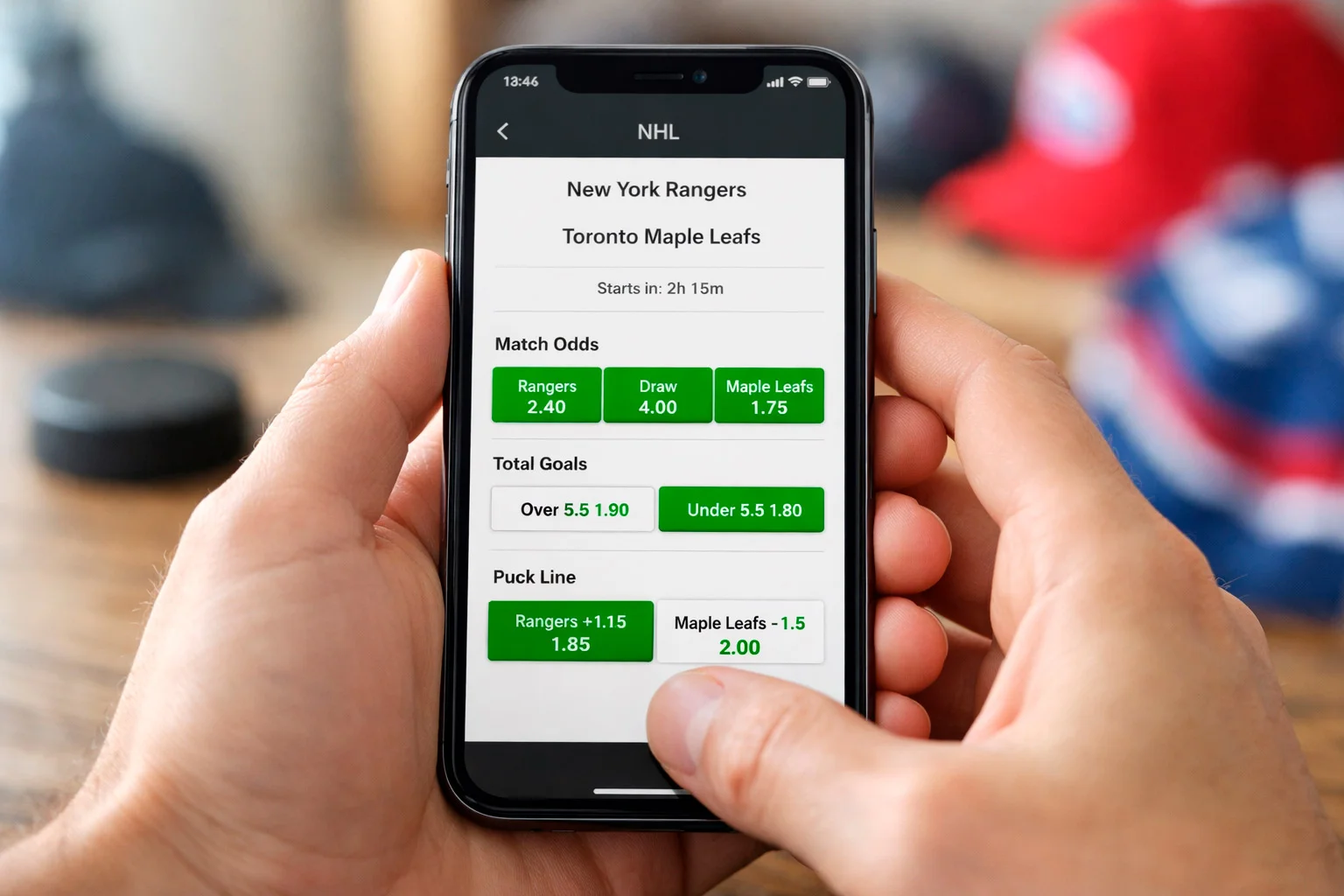
Major Sportsbooks Operating in Ontario
The licensed Ontario market reads like a who’s who of global sports betting. bet365 commands the largest customer base in the province, leveraging its reputation built over two decades of international operations. Their platform offers daily win limits up to $1 million for major North American leagues and $4 million for soccer, making them the preferred choice for high-stakes bettors. The live betting coverage is extensive, with odds refreshing in real-time across dozens of in-play markets. Their same-game parlay builder works smoothly, and the streaming functionality lets you watch many events directly within the app.
FanDuel brought its daily fantasy sports expertise to traditional betting, resulting in exceptionally deep player prop markets. NBA and NFL games feature props covering everything from three-pointers made to quarterback rushing yards to defensive sacks. The “No Sweat First Bet” promotion remains one of the more straightforward welcome offers — if your first wager loses, you receive the stake back as bonus bets. The interface sometimes feels too minimalist, requiring extra clicks to find alternate spreads, but the platform performs reliably under heavy traffic.
BetMGM appeals to bettors who appreciate the Vegas connection. The “edit my bet” feature allows adjustments to active wagers, a functionality competitors lack. Casino integration means everything exists within one account and one rewards program. DraftKings pairs competitive pools with a polished platform, while Sports Interaction focuses heavily on NHL markets and Canadian sports — unsurprising given its roots serving Canadians since 1997 from the Kahnawake territory in Quebec.
Beyond the big names, specialized operators serve specific niches. Pinnacle draws experienced bettors through high limits and sharp odds with minimal margin. TonyBet excels at international sports coverage, particularly tennis and European football. PowerPlay launched its Ontario-specific platform using Gaming Innovation Group’s SportX technology, featuring AI-driven betting tools. The variety ensures that whatever your betting preferences, some operator has designed their product with you in mind.
Compare the rules with other provinces like British Columbia sports betting.
Responsible Gambling and Player Protection
Ontario leads North America in centralized self-exclusion through its upcoming program expected in the first half of 2026. Currently, each operator maintains individual self-exclusion systems, meaning players must enroll separately at every site. The new Centralized Self-Exclusion Program, developed with Integrity Compliance 360 and IXUP (who previously built Australia’s BetStop system), will allow players to exclude themselves from all regulated iGaming sites through a single, streamlined process.
The AGCO mandates that all licensed operators provide robust responsible gambling tools. These include deposit limits (daily, weekly, and monthly options), loss limits, session time reminders, reality checks displaying time spent and money wagered, and cooling-off periods where limit changes require 24 hours to take effect. Staff at licensed operations receive training on recognizing problem gambling signs and appropriate responses. The Responsible Gambling Council oversees RG Check certification for all operators, while ConnexOntario provides 24/7 support with help available in over 100 languages through their hotline at 1-866-531-2600.
The regulatory framework explicitly prohibits certain advertising practices that other jurisdictions allow. Operators cannot promote bonuses or promotional offers in advertising, and athlete partnerships for betting promotion are banned. These restrictions aim to reduce gambling normalization and protect vulnerable populations, though some industry observers argue the rules hamper legitimate marketing while offshore operators face no such constraints.
The Black Market Problem and Enforcement
Despite the regulated market’s success, unlicensed offshore operators continue serving Ontario residents. Estimates suggest these grey and black market sites still capture significant market share, though precise figures are difficult to determine. The appeal is obvious: offshore sites face no advertising restrictions, offer potentially larger bonuses, and sometimes provide odds marginally better than regulated books who must account for their tax obligations.
The AGCO has responded with increasingly aggressive enforcement. In May 2025, the regulator issued strategic advisories to media platforms urging them to remove advertising for unlicensed offshore operators, explicitly naming Bodog among the problematic sites. The AGCO warned that such advertisements contribute to a misleading “veneer of legitimacy” and undermine consumer protections. Under the Gaming Control Act, the regulator can impose administrative monetary penalties exceeding $500,000 per offence.
For bettors, the calculus involves weighing potential benefits against real risks. Offshore sites lack regulatory oversight, meaning disputes have no formal resolution process and funds held in player accounts have no government protection. The “pending registration” status that some offshore operators claim provides no meaningful protection from enforcement action. Licensed Ontario sites keep player funds in segregated accounts and face regular compliance audits — protections absent from unregulated alternatives.

Banking, Deposits, and Withdrawals
Ontario sportsbooks accept the payment methods Canadians actually use. Interac e-Transfer dominates, offering instant deposits that process immediately. Debit and credit cards work at most sites, though some banks block gambling transactions. E-wallets including PayPal, Skrill, and MuchBetter provide alternatives with varying processing times.
Withdrawal speeds depend on the operator and payment method. E-wallets typically process within 24-48 hours. Interac withdrawals generally clear within one to three business days. Bank transfers take three to five business days. First withdrawals require identity verification — uploading government ID and sometimes proof of address — a one-time inconvenience required by anti-money laundering regulations.
The minimum age to bet in Ontario is 19 years, enforced through mandatory identity verification during registration. Players must physically be within Ontario to place bets, verified through geolocation technology. Even Ontario residents cannot use licensed sites while traveling to other provinces or abroad, though some visitors from other jurisdictions can bet while visiting Ontario.
What Ontario Means for Canadian Betting
Ontario’s success has inspired other provinces to reconsider their approach. Alberta passed Bill 48 (the iGaming Alberta Act) in May 2025, establishing a framework for a competitive market expected to launch in early 2026. Ontario officials have made themselves available to share lessons learned, though Alberta will ultimately make decisions appropriate for their jurisdiction.
The Ontario model proves that regulated competition works. Revenue flows to provincial coffers rather than offshore operators. Player protections exceed what grey-market sites provide. Operators invest in product quality to differentiate themselves in a crowded marketplace. The question facing other Canadian provinces is not whether the Ontario approach works, but whether they have the political will to implement something similar.
For Ontario bettors, the practical advice is straightforward: use licensed sites, maintain accounts at multiple sportsbooks for line shopping, take advantage of welcome offers, and set responsible gambling limits before you need them. The regulated market provides options that simply did not exist three years ago. Making the most of those options requires minimal effort but pays dividends over time.
Find legal operators on our Ontario wagering portal.
