
Let me guess why you’re here: you’ve been watching hockey games with friends who casually mention their bets, you’ve seen the endless sports betting commercials during every broadcast, or maybe you just won fifty bucks in a fantasy league and thought “there’s got to be a better way to do this.” Whatever brought you here, you’re standing at the same place millions of Canadians stood over the past few years—curious about sports betting but having absolutely no idea where to start.
The good news is sports betting isn’t complicated once someone explains it without the industry jargon and condescending tutorials. The bad news is there’s a learning curve, and nobody wants to look stupid asking basic questions. So you end up Googling things at midnight, reading conflicting advice, and feeling more confused than when you started.
I’ve been there. My first bet was a disaster—I didn’t understand odds, bet way too much money on a game I barely watched, lost immediately, and then spent the next week convinced sports betting was just legalized robbery. It took months of small mistakes and gradual learning before I figured out what actually matters versus what’s just noise.
This guide walks you through the entire process of betting on sports in Canada, from choosing your first sportsbook to placing your first bet to withdrawing your winnings. I’m not going to pretend betting is some get-rich-quick scheme or that following my advice guarantees profits. Sports betting is entertainment that occasionally pays you. Most people lose money. But if you’re going to bet anyway, you might as well understand what you’re doing, avoid the stupid mistakes that sink beginners, and give yourself a fighting chance.
We’ll cover the mechanics, the strategy, the terminology, the psychology, and the practical steps. By the end, you’ll know enough to bet confidently without feeling like you’re gambling blind. You still might lose your first bet—most people do—but at least you’ll understand why and what to adjust next time.
One critical disclaimer before we start: only bet money you can afford to lose. If losing two hundred dollars would stress you out or affect your rent, you shouldn’t be betting two hundred dollars. Start smaller, test the waters, and scale up only if you’re comfortable with the risks. Sports betting should be fun, not anxiety-inducing. If it stops being fun, stop doing it.
Alright, let’s get into it.
Understanding Your Options: Provincial vs Private Sportsbooks
The first decision you’ll face is which type of sportsbook to use, and the answer depends entirely on where you live.
If you’re in Ontario, you have access to over thirty licensed private sportsbooks—bet365, FanDuel, BetMGM, Sports Interaction, and dozens more. These platforms compete for your business with better odds, aggressive bonuses, sophisticated features, and customer service that actually responds. Ontario opened its market in April 2022, and the transformation was immediate. Suddenly Ontario bettors had the same options Americans were using, with competitive markets forcing platforms to actually earn customer loyalty.
Outside Ontario, your choices narrow significantly. Every province operates a lottery-based sportsbook—PlayNow in British Columbia, PlayAlberta in Alberta, Mise-o-jeu in Quebec, and others. These platforms improved dramatically after single-game betting became legal in August 2021. You can bet moneylines, spreads, totals, props, live bets, everything that modern betting requires. The interfaces are functional, the transactions are secure, and the operations are regulated by provincial gambling authorities.
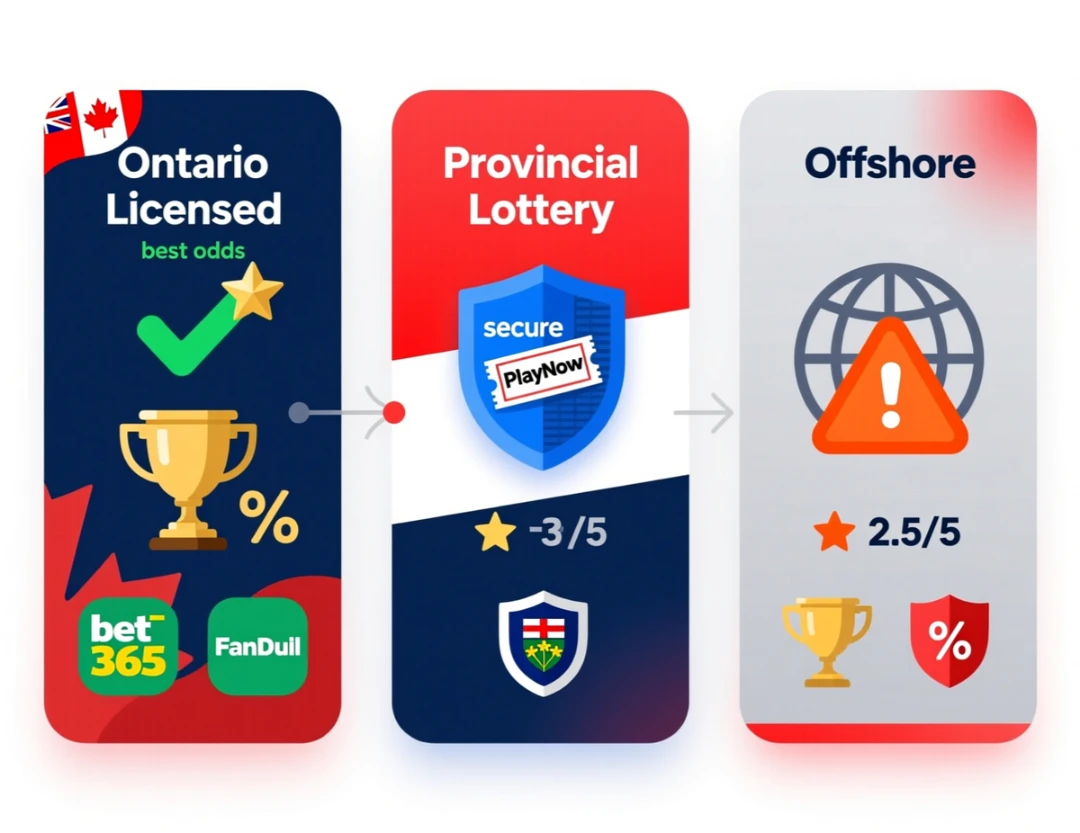
The catch is provincial platforms offer worse odds than competitive markets. The juice is higher, the lines are less sharp, and the features lag behind private operators. If you’re betting casually and value the security of government-run operations, provincial platforms work fine. If you’re betting regularly and care about maximizing value, the odds disadvantage becomes expensive over time.
The third option is offshore sportsbooks—platforms licensed in Malta, Curacao, the UK, or other international jurisdictions that accept Canadian customers. These aren’t illegal from a bettor perspective. Canadian law doesn’t prosecute residents for using offshore gambling sites. The risk exists on the operator side, not the customer side.
Offshore sportsbooks like Stake, Pinnacle, or Bodog offer better odds than provincial platforms, more markets, faster payouts, and better technology. The trade-off is regulatory protection. If an offshore platform refuses to pay your winnings or closes unexpectedly, you have limited recourse. Provincial gambling commissions don’t oversee offshore operators. Your money isn’t held in Canadian segregated accounts. Dispute resolution happens through foreign jurisdictions.
Reputable offshore platforms with decades of track records—bet365 (for non-Ontario residents), Pinnacle, Stake—have established reputations and rarely cause problems. Smaller, unknown platforms carry real risk. If you’re going the offshore route, stick to well-known operators with extensive user reviews and verifiable licensing.
For beginners, I’d recommend starting with the most accessible legitimate option in your province. If you’re in Ontario, choose a licensed platform like Sports Interaction or bet365. Outside Ontario, start with your provincial platform to understand the mechanics before exploring offshore alternatives. You can always open additional accounts later once you understand what features matter to you.
The important thing is choosing a legitimate, licensed operator rather than some random platform you found through a spam email. Legitimate sportsbooks display their licensing information prominently, have verifiable track records, and operate transparently. If you can’t figure out who regulates a platform or where they’re actually based, that’s a massive red flag.
Choosing Your First Sportsbook
Alright, you’ve decided to actually do this. Now comes the practical question: which specific sportsbook should you sign up for?
For Ontario residents, I’d recommend starting with Sports Interaction or bet365. Sports Interaction is Canadian-focused, has a straightforward interface, and offers excellent customer service that actually helps beginners. bet365 provides the best odds and most professional platform but has a steeper learning curve due to sheer feature volume. Both are legitimate, licensed, and trustworthy.
Outside Ontario, start with your provincial lottery platform—PlayNow, PlayAlberta, Proline, whatever operates in your province. Yes, the odds are worse than offshore alternatives. Yes, the features are more limited. But you’ll learn the mechanics in a regulated environment without worrying about whether the platform is trustworthy. Once you understand how betting works, you can explore offshore options if you want better odds.
What should you look for as a beginner? User-friendly interface is crucial—if you can’t figure out where to place a bet, the platform failed. Responsive customer support matters because you will have questions, and waiting three days for email responses is unacceptable. Reasonable welcome bonuses help build your bankroll, but prioritize platforms with transparent terms over massive bonuses with impossible requirements. Finally, make sure the platform actually covers the sports you want to bet on. If you only care about NHL games, you don’t need a platform with extensive cricket coverage.
Avoid platforms with red flags: vague licensing information, unreachable customer service, aggressive pop-ups demanding immediate deposits, or reviews mentioning withdrawal problems. Legitimate sportsbooks don’t use high-pressure tactics because their products sell themselves.
Creating Your Account: The Actual Process
You’ve chosen a sportsbook. Time to actually sign up.
Navigate to their website or download their mobile app. Click “Sign Up,” “Register,” or whatever button initiates account creation. You’ll face a registration form requesting:
Personal information: full legal name, date of birth, email address, phone number. Use accurate information. Sportsbooks verify identity before processing withdrawals, and discrepancies cause problems.
Address information: residential address, postal code, province. Again, accuracy matters. Some platforms use address verification services.
Username and password: choose something secure. Don’t reuse passwords from other accounts.
After submitting, you’ll receive a verification email. Click the link to confirm your email address. Some platforms send SMS verification codes as additional security.
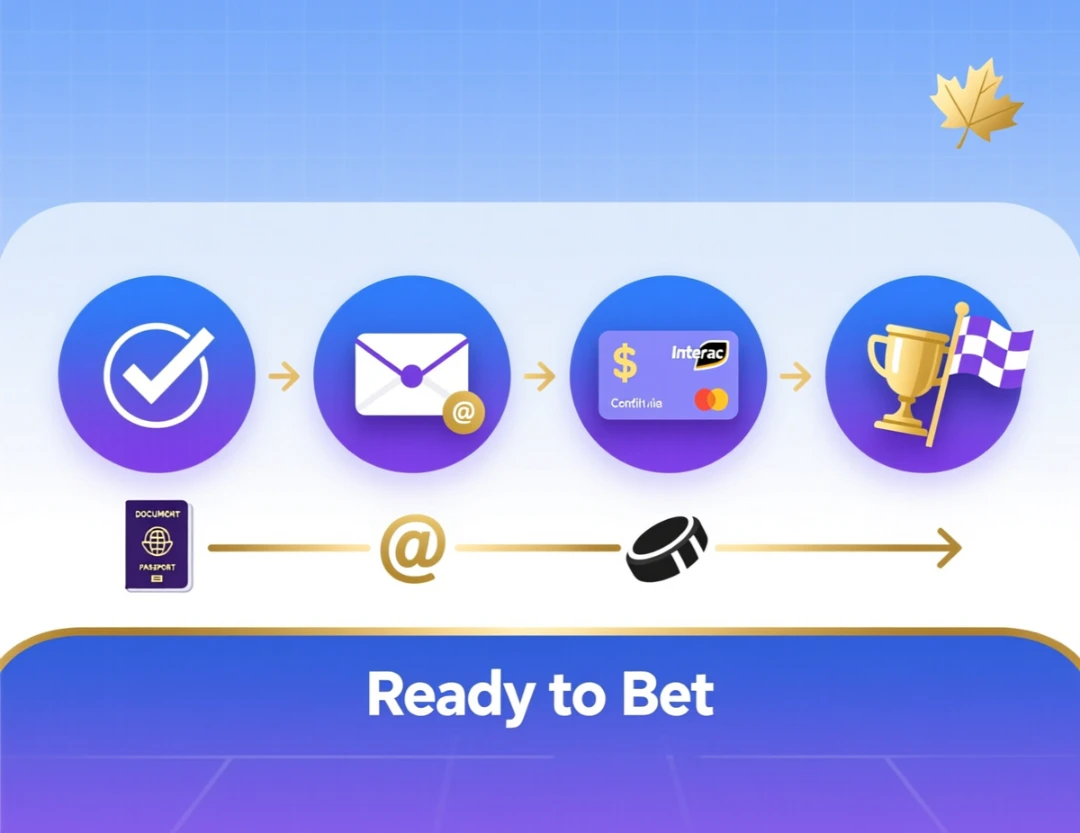
Next comes identity verification. Ontario platforms and some provincial platforms require this immediately. Others delay verification until your first withdrawal. Either way, you’ll eventually submit:
Government-issued photo ID: driver’s license, passport, or provincial ID card. Take a clear photo showing all corners and text legibility.
Proof of address: utility bill, bank statement, or government document showing your name and current address. Must be recent—within three months typically.
Upload documents through the platform’s verification portal. Processing usually takes a few hours during business days, potentially longer on weekends. Some platforms offer instant verification through third-party services that cross-reference databases.
Why all this verification? Anti-money laundering regulations and responsible gambling requirements mandate identity confirmation. Sportsbooks need to prevent minors from gambling, comply with self-exclusion lists, and ensure customers are who they claim to be. It’s annoying but necessary.
Once verified, your account is fully functional. Time to fund it.
Making Your First Deposit
Navigate to the cashier, deposit section, or payment portal—every platform names it differently. You’ll see available deposit methods.
Interac e-Transfer is the most common Canadian deposit method. Select it, enter your deposit amount, and you’ll receive instructions. Some platforms use direct Interac integration where you log into your bank through their site. Others provide an email address where you send an e-Transfer manually. Follow their specific instructions carefully.
Deposits typically process within minutes. The funds appear in your sportsbook account, and you can bet immediately.
Credit/debit cards work on some platforms, though Canadian banks increasingly block gambling transactions. Visa and Mastercard process gambling purchases at their discretion. Your card might work or might decline—no way to know without trying.
Bank transfers are slower but reliable for larger deposits. You initiate a transfer from your bank account to the sportsbook’s bank account. Processing takes one to three business days. Banks rarely block transfers since they appear as standard account-to-account transactions.
Cryptocurrency works on some platforms, particularly offshore operators. Bitcoin, Ethereum, and stablecoins like USDT process quickly and avoid banking restrictions. The trade-off is crypto volatility and the learning curve of acquiring cryptocurrency if you don’t already own it.
How much should you deposit? Start conservatively. Deposit one hundred to two hundred dollars maximum for your first time. This gives you enough bankroll for multiple small bets without risking significant money while you’re still learning. You can always add more later.
Never deposit money you can’t afford to lose. If losing that deposit would stress you out or affect necessary expenses, you’re depositing too much. Scale down immediately.
Some platforms offer deposit bonuses—“deposit one hundred dollars, get one hundred dollars bonus.” Read the terms carefully. Bonuses almost always come with wagering requirements—you need to bet a certain amount before withdrawing bonus funds. A “thirty times rollover” means betting thirty times the bonus amount before cashing out. These requirements can be reasonable or impossible depending on the platform.
My advice: ignore bonuses for your first deposit. Learn the platform’s mechanics without complicated bonus terms confusing things. Once you understand how everything works, you can claim bonuses on future deposits if the terms are reasonable.
Understanding Odds: The Foundation of Betting
Before placing bets, you need to understand odds. They’re not complicated once explained properly.
Odds represent two things simultaneously: the probability of an outcome happening and the payout you receive if that outcome occurs. Canadian sportsbooks typically display odds in American format, though some offer decimal or fractional alternatives.
American odds use positive and negative numbers. Negative odds indicate favorites—the team expected to win. Positive odds indicate underdogs—the team expected to lose.
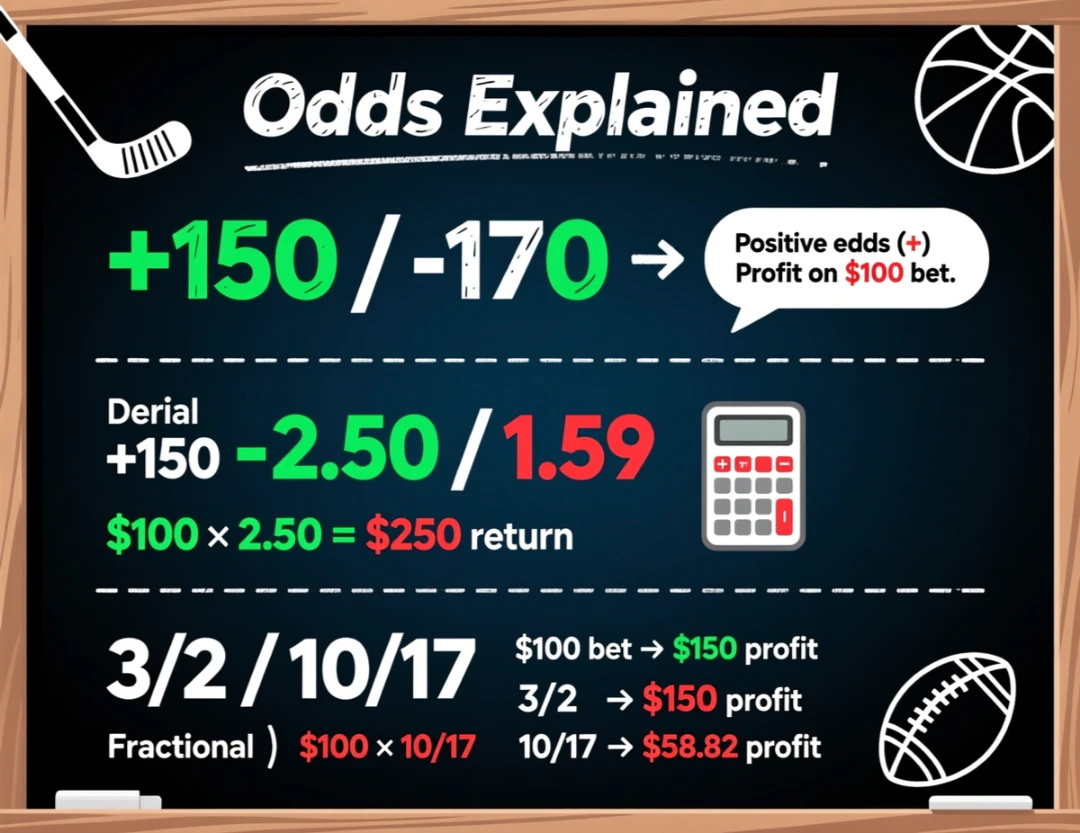
If Toronto is -150 to beat Montreal, that means Toronto is the favorite. The -150 tells you how much you need to bet to win one hundred dollars. To win one hundred dollars on Toronto, you’d bet one hundred fifty dollars. Your total return would be two hundred fifty dollars—your original stake plus one hundred dollars profit.
If Montreal is +130, they’re the underdog. The +130 tells you how much profit you make on a one hundred dollar bet. Bet one hundred dollars on Montreal, and if they win, you profit one hundred thirty dollars. Your total return is two hundred thirty dollars.
The math scales proportionally. If you bet fifteen dollars on Toronto at -150, you’d win ten dollars profit. If you bet ten dollars on Montreal at +130, you’d win thirteen dollars profit.
Decimal odds are simpler mathematically. They show your total return including your stake. Toronto at 1.67 decimal odds means a ten dollar bet returns sixteen dollars seventy cents total. Montreal at 2.30 means a ten dollar bet returns twenty-three dollars total.
To calculate profit with decimal odds: multiply your stake by the odds, then subtract your stake. Ten dollars at 2.30 returns twenty-three dollars total, which is thirteen dollars profit.
Fractional odds are less common in Canada but appear occasionally. They show profit relative to stake. Odds of 3/2 mean you profit three dollars for every two dollars wagered. Bet twenty dollars, profit thirty dollars.
Most Canadian platforms default to American odds, but you can change the format in settings if you prefer decimal or fractional.
The key concept: odds reflect probability and payout. Lower odds mean higher probability but lower payout. Higher odds mean lower probability but higher payout. A heavy favorite at -500 is very likely to win but pays almost nothing. A massive underdog at +800 probably loses but pays huge if they somehow win.
Understanding odds lets you evaluate whether a bet offers value—whether the payout justifies the risk. That’s a more advanced concept you’ll develop over time, but for now, just understand what the numbers mean and how payouts are calculated.
Placing Your First Bet: The Actual Mechanics
You’ve deposited money, you understand odds, now it’s time to actually bet.
Navigate to the sport you want to bet on. Let’s say NHL hockey since you’re Canadian. You’ll see a list of upcoming games with odds for each.
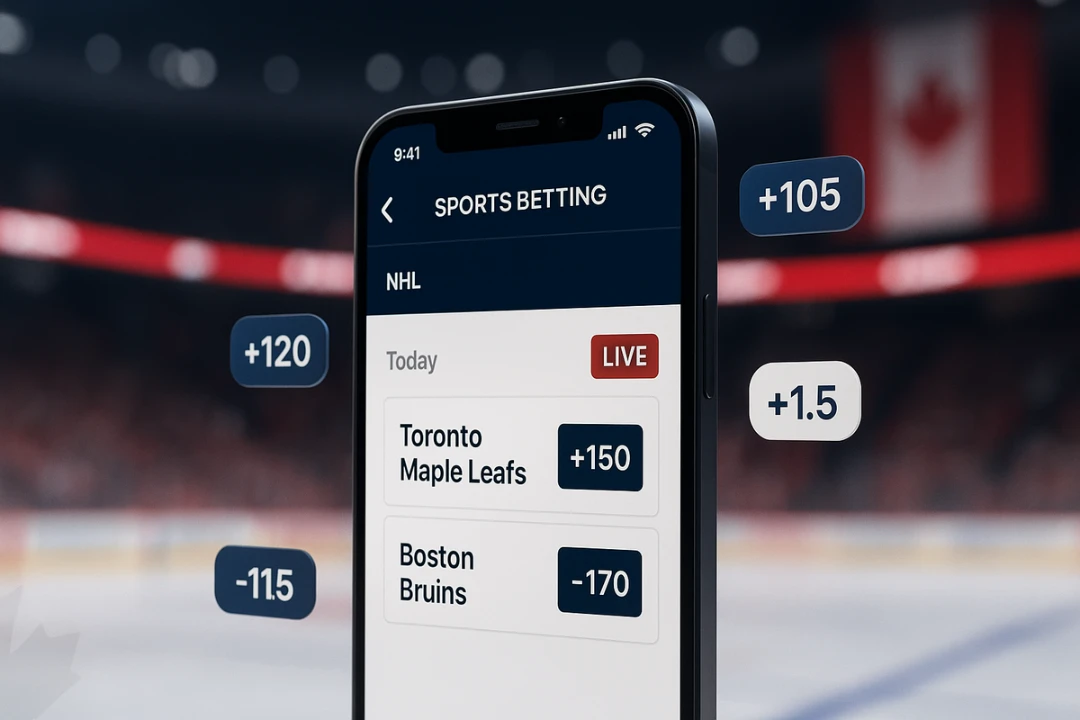
Pick a game. Toronto Maple Leafs versus Boston Bruins tonight. Click on it, and you’ll see betting options:
Moneyline: betting on who wins straight-up. Toronto -170, Boston +150. These are the odds we discussed earlier.
Spread (also called puck line in hockey): betting on the margin of victory. Toronto -1.5 at +120, Boston +1.5 at -140.
Total (also called over/under): betting on combined score. Over 6.5 goals at -110, under 6.5 goals at -110.
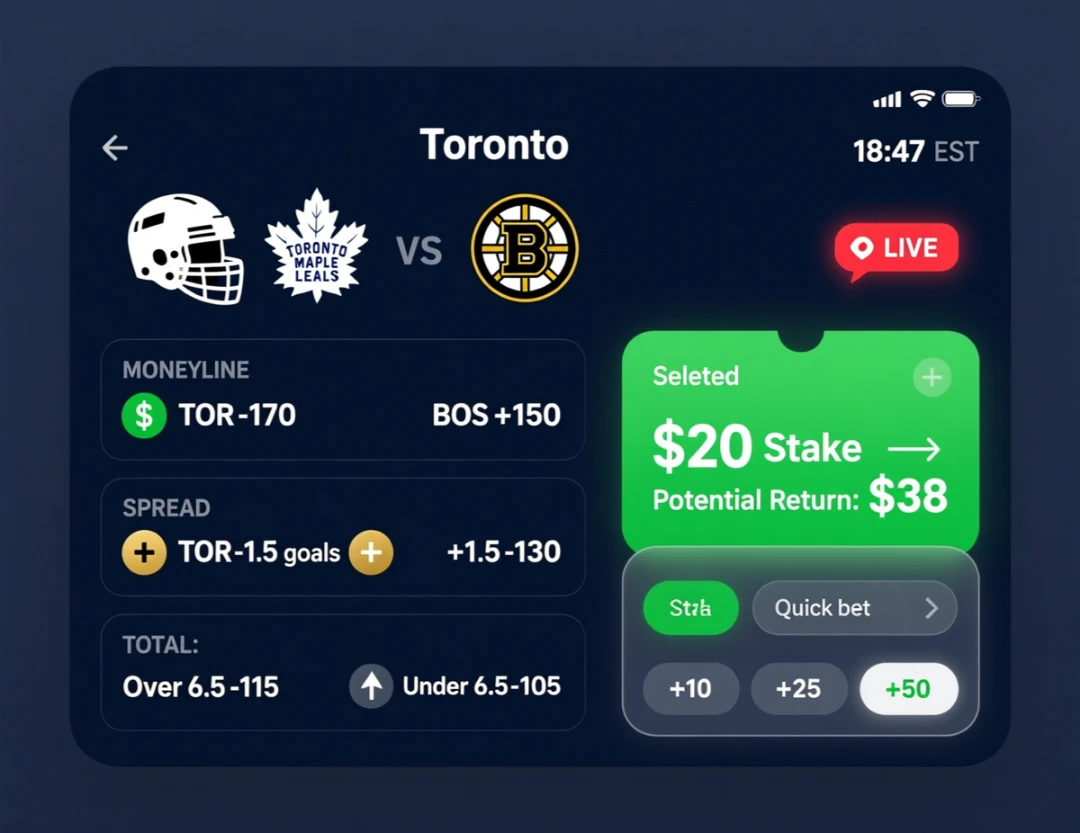
The moneyline is simplest. Pick the team you think wins. Toronto at -170 means they’re favored. Boston at +150 means they’re underdogs. If you bet Boston and they win, you profit more than betting Toronto because it’s considered less likely.
The spread levels the playing field. If Toronto is -1.5, they need to win by two or more goals for that bet to cash. If they win 3-2, the spread bet loses because they only won by one. Boston +1.5 means they can lose by one goal and you still win the bet.
The total bets on combined score. If the total is 6.5 and you bet over, the teams need to score seven or more goals combined. Under means six or fewer. You don’t care who wins, just whether the game is high-scoring or low-scoring.
To place a bet, click the odds you want. The selection adds to your bet slip—that sidebar or pop-up showing your active bets. Enter your stake amount, check the potential payout looks correct, and click “Place Bet” or “Confirm.” That’s it. Your money is now riding on the outcome.
Start with small stakes. Your first bet should be ten to twenty dollars maximum, just enough to make you care about the outcome without ruining your week if it loses. You’re learning. Mistakes happen. Losing fifty dollars on your first bet because you misunderstood odds or bet on the wrong team feels terrible and discourages continued learning.
Watch the game if you can. Part of betting’s appeal is increased engagement with games you might not normally care about. Suddenly a random Tuesday night game between Ottawa and Calgary matters because you have money riding on it.
When the game ends, bets settle automatically within minutes. Winning bets credit your account, losing bets disappear. It’s that simple.
Withdrawing Winnings and Avoiding Beginner Mistakes
Let’s say you won. Congratulations. Now you want your money.
Navigate to the cashier, select withdrawal, choose your method—usually the same method you used for deposits—and enter the amount. First withdrawals trigger additional identity verification if you skipped it earlier. The platform needs to confirm you’re actually you before sending money. This takes a few hours if you submit documents during business hours, possibly longer on weekends.
Processing times vary by method. Interac withdrawals typically take twenty-four to forty-eight hours. Bank transfers take three to five business days. Credit card refunds can take up to a week. Cryptocurrency withdrawals on platforms like Stake settle within hours.
Common beginner mistakes that waste money and cause frustration:
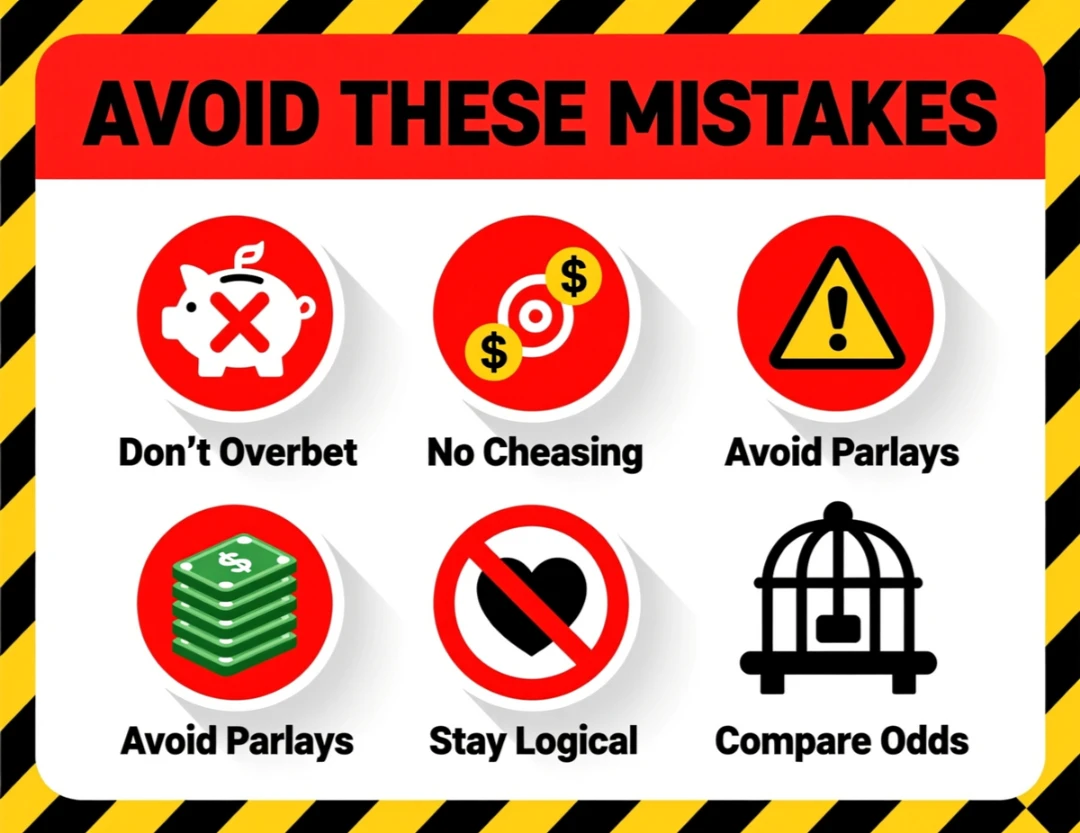
Betting more than you can afford to lose. If losing would affect rent, bills, or food, you’re betting too much. Scale down immediately.
Chasing losses. You lose a hundred-dollar bet, immediately bet two hundred trying to win it back. This is the fastest path to financial ruin. Losses happen. Accept them, move on, bet smarter next time.
Ignoring bonus terms. You see “one thousand dollar bonus” and deposit without reading requirements. Then you discover you need to wager twenty thousand dollars before withdrawing, or that minimum odds are impossible to hit consistently. Read terms before claiming bonuses.
Betting on sports you don’t understand. You see good odds on Argentine soccer and bet it despite never watching the sport. This rarely ends well. Stick to sports you actually follow.
Emotional betting. Betting on your favorite team because you want them to win, not because the odds offer value. Emotional decisions lose money. Bet with your brain, not your heart.
Not shopping for odds. Using only one sportsbook means accepting whatever odds they offer. Maintaining accounts at multiple platforms and comparing odds before each bet improves profitability without changing your handicapping.
Betting parlays constantly. Combining multiple games into one bet creates massive payouts but terrible odds. Sportsbooks love parlays because they’re profit engines. Sharp bettors avoid them.
The path to successful betting isn’t complicated: bet small, learn from mistakes, manage your bankroll carefully, understand what you’re betting on, and treat it as entertainment rather than income. Most bettors never follow this advice, which is why most bettors lose money. You don’t have to be most bettors.
Moving Forward: What Comes Next
You’ve placed your first bet. Maybe you won, maybe you lost. Either way, you survived the initiation and now understand the mechanics.
Where you go from here depends on your goals. If you’re betting casually for entertainment—putting twenty dollars on weekend games to make them more interesting—you already know enough. Keep stakes small, focus on sports you enjoy, and remember it’s entertainment that occasionally pays you.
If you want to bet more seriously and actually try to profit long-term, the learning process just started. You’ll need to understand implied probability, how to find value in odds, bankroll management strategies, sport-specific angles, and how to analyze matchups beyond surface stats. That education takes months or years, not days.
The resources exist for serious learning—books on sports betting strategy, forums where experienced bettors discuss approaches, tracking software for analyzing your betting history, and communities sharing information. But most beginners don’t need that immediately. Learn the basics first, place a few dozen bets, figure out what you enjoy betting on, then decide whether deeper education interests you.
One last piece of advice: sports betting should enhance your enjoyment of sports, not replace it. If watching games becomes stressful because money is involved, if you’re betting on sports you don’t care about just for action, or if checking odds consumes more time than watching actual games, something’s wrong. Betting should be fun. The moment it stops being fun, take a break or stop entirely.
Good luck with your betting. Start small, learn continuously, manage risk carefully, and never bet more than you can afford to lose. Those principles will serve you well whether you’re a casual bettor or someone chasing serious profits.
Welcome to Canadian sports betting. Try not to lose all your money.
