

Understanding Canadian sports betting laws feels like trying to navigate a maze where every province built their own walls at different heights. The rules in Ontario look nothing like the rules in Alberta. What’s legal in British Columbia operates differently from Quebec. And somehow, despite all this fragmentation, the entire system works—mostly.
If you’ve landed on this page, you’re probably trying to figure out whether betting on sports is actually legal where you live, which platforms you can use without ending up on some government watchlist, and why your friend in Toronto has access to twenty different sportsbooks while you’re stuck with a provincial lottery site that looks like it was designed during the flip phone era.
Here’s the reality: sports betting is legal across Canada, but the implementation varies so dramatically from province to province that saying “it’s legal” barely scratches the surface. The federal government legalized single-game betting in 2021, then essentially told each province to figure out their own approach. Ontario went full capitalist and opened the market to private operators. Most other provinces kept their lottery monopolies. A few are somewhere in between, contemplating what to do next.
This guide breaks down exactly how betting laws work in Canada, province by province, so you understand not just what’s legal, but why the system works this way, what your actual options are, and where things might be heading. I’ve spent years tracking Canadian gambling legislation, watching regulatory hearings that would bore most people to tears, and analyzing how different provincial approaches affect real bettors. This isn’t legal advice—I’m not a lawyer, and you shouldn’t make decisions based solely on some article you found online. But it is the most comprehensive breakdown of Canadian betting laws you’ll find anywhere, written by someone who actually gives a damn about accuracy.
Let’s start at the beginning, because understanding where we are requires knowing how we got here.
The Road to Legalization: How Canada Got Here
Canadian gambling history is basically the government saying no to everything for decades, then gradually changing their minds one reluctant step at a time.
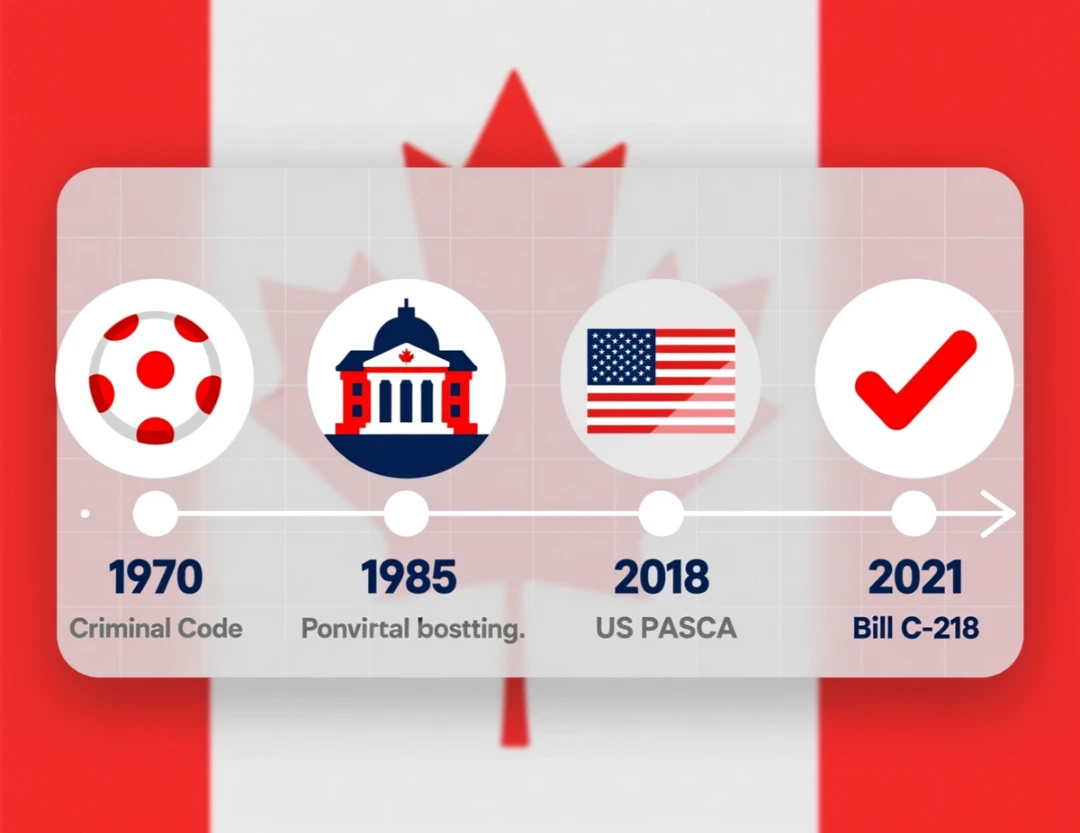
Pre-1970, gambling was almost entirely illegal under the Criminal Code of Canada. You couldn’t run a casino, operate a lottery, or bet on sports outside of horse racing. The rationale was moral panic mixed with concerns about organized crime, which to be fair, had legitimate roots. The mafia ran illegal gambling operations across North America, and Canadian lawmakers wanted nothing to do with enabling that infrastructure.
In 1970, Parliament amended the Criminal Code to allow provincial governments to operate lotteries and certain forms of gambling. This opened the door for provinces to establish lottery corporations, which became massive revenue generators. British Columbia launched the BC Lottery Corporation in 1985. Ontario established the Ontario Lottery and Gaming Corporation around the same time. Other provinces followed similar paths, creating government-run entities that held monopolies over legal gambling within their borders.
But there was a catch, and it was a big one. Section 207 of the Criminal Code prohibited single-event sports betting. You could bet on sports, technically, but only through parlay bets—combinations where you had to pick multiple games correctly or lose everything. If you wanted to bet on the Maple Leafs to beat the Bruins, that wasn’t allowed. You had to combine it with at least two other games, and all three needed to hit for you to win.
This restriction was absurd even at the time, but it stuck around for fifty years. Why? Partially because organized crime concerns lingered in the minds of older lawmakers. Partially because provincial lottery corporations weren’t pushing hard for change—they made plenty of money from their existing monopolies without needing to rock the boat. And partially because gambling reform just isn’t a priority for most politicians. It’s not sexy, it doesn’t win elections, and advocating for expanded gambling access can look bad in certain communities.
Meanwhile, the rest of the world moved on. European sportsbooks thrived. American states started legalizing sports betting after the Supreme Court struck down PASPA in 2018. Canadian bettors, watching friends in New Jersey and Pennsylvania use sleek betting apps, grew increasingly frustrated with being stuck in the parlay-only dark ages.
The pressure finally broke through in 2020. A combination of factors converged: provincial governments needed new revenue sources after pandemic budget hits, American sports leagues recognized the financial upside of legal betting and stopped opposing it, and younger politicians who grew up with online gambling entered office. Brian Masse, a Member of Parliament from Windsor, introduced Bill C-218 in February 2020, calling it the Safe and Regulated Sports Betting Act. The timing was perfect—professional sports had just shut down due to COVID, and when they returned, viewership was down. Sports leagues saw betting as a tool to re-engage fans.
The bill moved through Parliament faster than most gambling reform ever had. The House of Commons passed it in April 2021. The Senate approved it in June, despite some hand-wringing about addiction concerns and social costs. On June 29, 2021, Bill C-218 received Royal Assent, officially becoming law. Implementation took two months to allow provinces time to prepare. On August 27, 2021, single-event sports betting became legal across Canada.
Within hours, provincial lottery platforms launched updated versions of their betting products. PlayNow in BC, Proline in Ontario, Mise-o-jeu in Quebec—all went live the same day with single-game betting. Canadians could finally bet on individual games without the parlay restriction. It was a watershed moment, even if most provinces stuck with their government-run monopolies.
The real fireworks came eight months later when Ontario decided to blow the whole model wide open.
Learn more about the most regulated market in our Ontario sports betting guide.
Bill C-218: What Actually Changed
Bill C-218 did one specific thing: it removed single-event sports betting from Section 207(4)(b) of the Criminal Code. That’s it. The bill didn’t legalize sports betting across Canada in some sweeping declaration. It simply removed the federal prohibition, which then allowed provincial governments to decide whether and how to offer sports betting within their jurisdictions.
Think of it like marijuana legalization. The federal government decriminalized cannabis, but each province implemented their own rules about sales, distribution, age limits, and where you could consume it. Bill C-218 worked the same way for sports betting. The federal restriction disappeared, and provinces gained full authority to regulate betting as they saw fit.
The key text of the bill amended the Criminal Code to allow provinces and territories to conduct and manage lottery schemes that include betting on single sporting events. Previously, provinces could only offer parlay betting—multiple events combined into one ticket. Now they could offer moneylines, point spreads, totals, prop bets, live betting, everything that modern sportsbooks provide.
Critically, Bill C-218 didn’t mandate that provinces do anything. It granted permission, not requirements. A province could choose to offer no sports betting at all if they wanted, though none took that approach. Every province saw the revenue potential—billions of dollars were already flowing to offshore sportsbooks from Canadian bettors, and provincial governments wanted to capture that money.
The bill also didn’t address private operators. It gave provincial lottery corporations the explicit right to offer sports betting, but it remained silent on whether provinces could license private companies to run sportsbooks. That ambiguity became crucial, because it left the door open for Ontario to interpret the law broadly and create a competitive market.
Understanding Bill C-218’s actual scope matters because people often misunderstand what changed. The bill didn’t create a unified national sports betting framework. It didn’t establish federal regulations for sportsbooks. It didn’t set standards for responsible gambling or consumer protection. All of that remains under provincial jurisdiction.
What Bill C-218 did was remove the single biggest obstacle preventing provinces from offering modern sports betting. Everything else—market structure, licensing requirements, operator standards, tax rates, permitted bet types—falls to individual provinces to determine.
That’s why Canadian sports betting looks so different depending where you live.
Ontario’s Competitive Market vs Provincial Monopolies

Ontario didn’t just legalize sports betting. They built an entirely different system from every other province.
On April 4, 2022, Ontario launched iGaming Ontario, a regulatory body operating under the Alcohol and Gaming Commission of Ontario (AGCO). iGaming Ontario doesn’t run sportsbooks itself. Instead, it licenses private operators who meet strict regulatory standards. Companies apply for licenses, undergo background checks, demonstrate financial stability, prove their technology works, and commit to responsible gambling requirements. If approved, they can operate legally in Ontario, competing directly with each other and with the provincially-run Proline platform.
The result? Ontario residents now have access to dozens of licensed sportsbooks. bet365, FanDuel, DraftKings, BetMGM, PointsBet, theScore Bet, Rivalry, BetVictor, Betway, Sports Interaction—all operate legally in Ontario. These aren’t sketchy offshore sites. They’re fully regulated, licensed operators subject to Ontario’s gambling laws.
Why did Ontario take this approach when other provinces stuck with lottery monopolies? Money, mostly. Ontario analyzed revenue data from European markets and US states with competitive betting markets. They concluded that a competitive market with multiple operators would generate more total handle (money wagered) than a single provincial platform could capture. More handle means more tax revenue, even if the provincial cut per bet is smaller.
The math worked. iGaming Ontario reported $14.9 billion in total wagers during the 2022-2023 fiscal year. That’s an absurd amount of money flowing through regulated sportsbooks in a single province. Tax revenue hit hundreds of millions of dollars. The competitive model proved profitable both for operators and the government.
The trade-off is regulatory complexity. Ontario needed to build an entire licensing framework, establish technical standards, create enforcement mechanisms, and staff a regulatory agency. That requires significant upfront investment and ongoing operational costs. Smaller provinces looked at Ontario’s model and concluded the juice wasn’t worth the squeeze—maintaining a lottery monopoly is administratively simpler even if the revenue ceiling is lower.
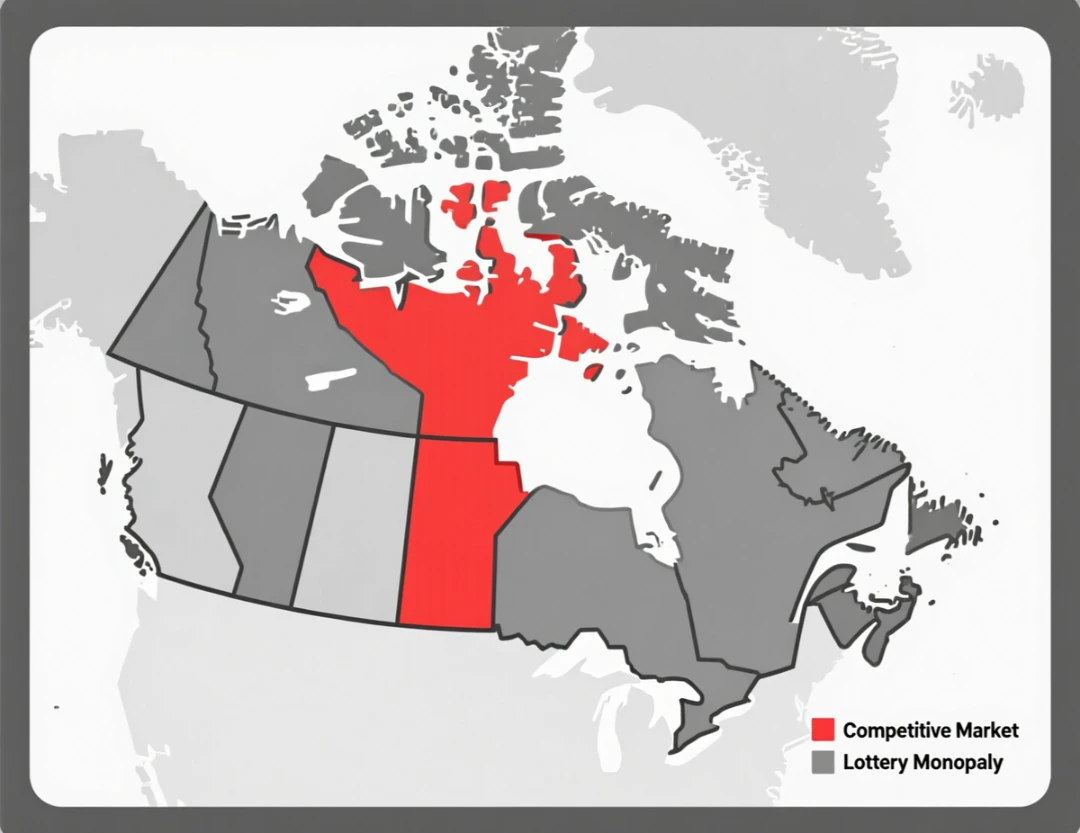
British Columbia runs PlayNow through the BC Lottery Corporation. Saskatchewan has SaskGaming. Manitoba operates PlayNow Manitoba. These platforms all launched single-game betting in 2021, but they remain government-run monopolies. No private operators are licensed. No competition exists.
The difference in user experience is stark. Ontario residents can compare odds across multiple sportsbooks, shop for the best lines, take advantage of competitive promotions, and choose platforms based on features they prefer. Someone in BC gets PlayNow or nothing (legally, at least—offshore options still exist).
Alberta represents the next potential domino. The provincial government has discussed opening a competitive market similar to Ontario’s. Alberta Gaming, Liquor, and Cannabis (AGLC) already regulates casinos and lottery products. Extending that framework to license private sportsbooks is feasible from a regulatory standpoint.
Alberta’s population of 4.7 million makes it Canada’s fourth-largest province. A competitive market could generate significant revenue, especially given Alberta’s sports-focused culture. The Oilers and Flames have devoted fanbases. Calgary hosts major sporting events. The appetite for sports betting is clearly there.
Whether Alberta actually follows through remains unclear. Provincial politics shift, budget priorities change, and regulatory frameworks take years to build. But Alberta is the province most likely to follow Ontario’s path.
Quebec runs Mise-o-jeu through Loto-Québec. The platform is functional, with single-game betting available since 2021. French language support is mandatory, reflecting Quebec’s linguistic priorities. The provincial government shows no interest in opening the market—Loto-Québec’s monopoly is entrenched, profitable, and politically protected.
Quebec’s unique language requirements would complicate private operators entering the market anyway. All customer service, terms and conditions, and platform text would need French versions. That’s doable but adds costs that make Quebec less attractive than Ontario from a business perspective.
Manitoba, Saskatchewan, the Atlantic provinces—all operate similar lottery-run monopolies through their provincial gambling authorities. Single-game betting is available. The platforms work. Nobody’s rushing to change the system.
The Grey Market Reality
Let’s address the elephant in the room: offshore sportsbooks.
Millions of Canadians outside Ontario use betting platforms licensed in Malta, Curacao, the UK, or other international jurisdictions. Platforms like bet365 (for non-Ontario residents), Pinnacle, Betway, Stake, Bodog, and dozens more operate in what’s called the “grey market.”
These aren’t illegal in the way most people think. The Criminal Code doesn’t prohibit Canadian residents from using offshore gambling sites. What’s illegal is operating an unlicensed gambling business in Canada or providing gambling services to Canadians without authorization from a provincial regulator. Individual bettors aren’t breaking the law by using these platforms.
Provincial governments don’t prosecute residents for betting with offshore sportsbooks. Law enforcement doesn’t raid homes or freeze bank accounts. The risk is on the operator side, not the customer side.
So why do people use offshore sites despite provincial platforms being available? Simple: better odds, more markets, superior technology, faster payouts, and better promotions. Provincial lottery platforms improved dramatically post-2021, but they still can’t match the features that competitive operators provide.
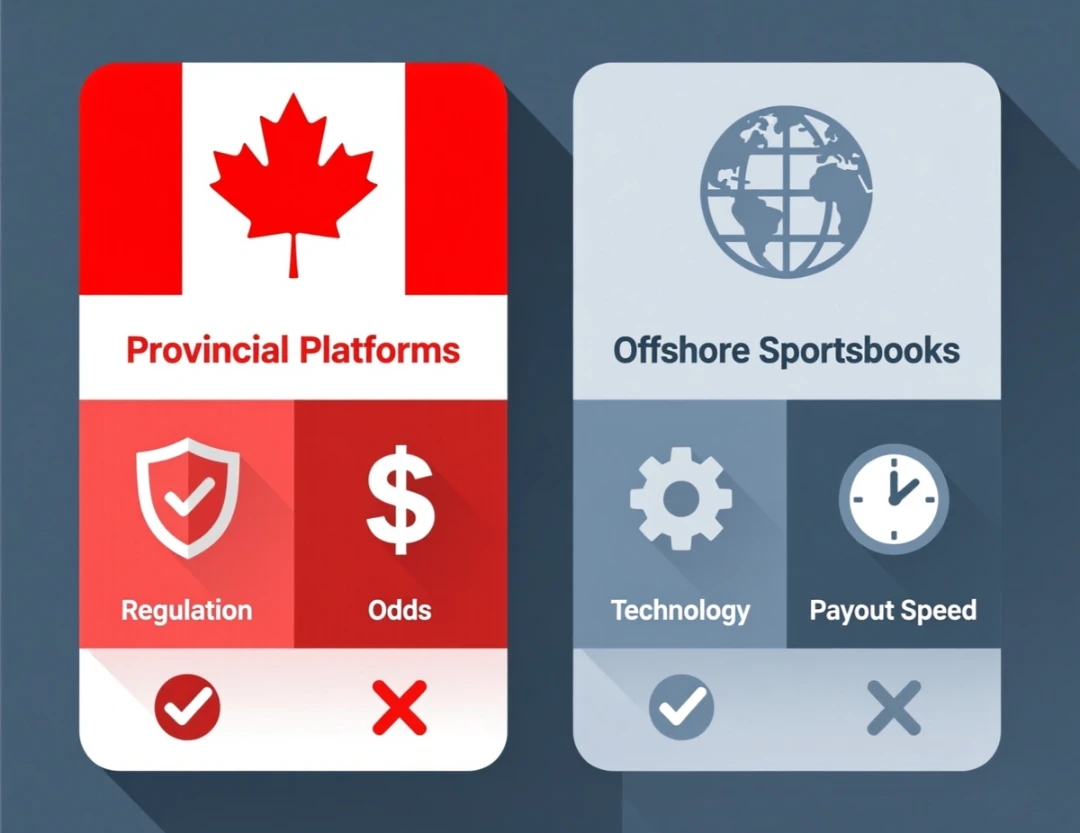
The trade-off is regulatory protection. Offshore sportsbooks aren’t subject to Canadian consumer protection laws. If an offshore platform closes suddenly, refuses to pay winnings, or has technical issues that lose your bets, you have limited recourse. Provincial gambling commissions don’t regulate offshore operators. Your money isn’t held in Canadian segregated accounts. Dispute resolution happens through foreign jurisdictions.
Reputable offshore sportsbooks with established track records—bet365, Betway, Pinnacle—have been operating for decades without major scandals. They’re licensed by legitimate gambling authorities in their home countries. These aren’t fly-by-night operations. But smaller, lesser-known platforms carry real risk.
The grey market won’t disappear. As long as provincial platforms outside Ontario offer inferior odds, Canadian bettors will seek better options offshore. Provincial governments know this, which is part of why Alberta is considering opening their market.
Age Requirements, Tax Implications, and Future Outlook
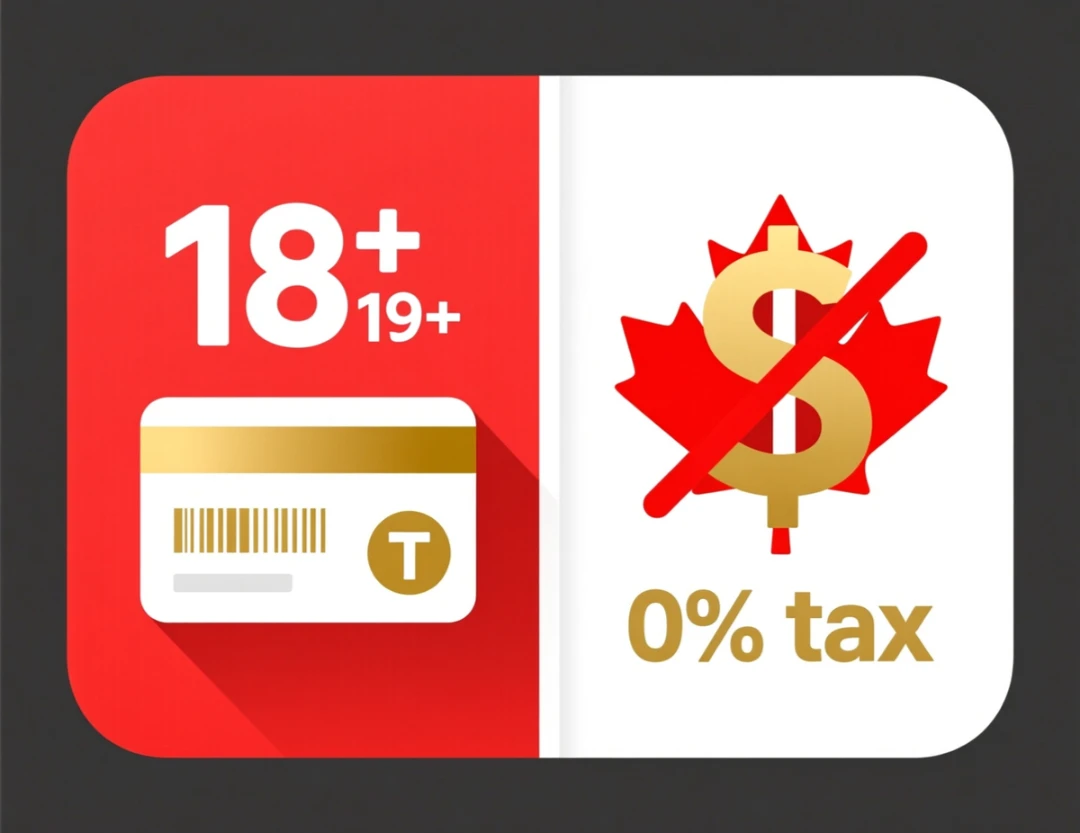
Age requirements split along provincial lines. Most provinces require nineteen: Ontario, BC, Nova Scotia, New Brunswick, Newfoundland, Prince Edward Island, Saskatchewan, Northwest Territories, Yukon, and Nunavut. Alberta, Quebec, and Manitoba set the legal age at eighteen.
Enforcement happens through mandatory identity verification during account registration. You’ll need government-issued ID—driver’s license, passport, or provincial ID card. Sportsbooks verify your age before processing any deposits or withdrawals. Attempting to bet underage is a quick way to get permanently banned.
Tax implications are surprisingly simple: gambling winnings aren’t taxable in Canada. You win ten thousand dollars betting on the Raptors? Keep all ten thousand. No income tax, no capital gains, nothing owed to the CRA. This differs dramatically from the United States, where gambling winnings are taxable income.
The only exception is professional gamblers. If you’re making consistent income from betting and treating it as a business rather than recreational activity, the CRA might classify your winnings as business income. That’s an extreme edge case affecting fewer than a thousand Canadians. For everyone else, winnings are tax-free.
Looking forward, Canada’s betting landscape will continue evolving. Alberta might open a competitive market. Other provinces might follow if Ontario’s model proves sustainably profitable. Bill S-269, proposed federal legislation restricting sports betting advertising, could pass and change marketing practices nationwide.
The industry is growing regardless of regulatory specifics. iGaming Ontario reported handle increases every quarter since launch. Sports betting is now mainstream entertainment for millions of Canadians. That reality isn’t reversing.
Final Thoughts on Canadian Betting Laws
Canadian sports betting laws are a provincial patchwork held together by federal permission. Ontario runs a competitive market with private operators. Most other provinces maintain lottery monopolies. Offshore sportsbooks fill the gaps for bettors seeking better odds and features.
The legal framework is clear: betting through provincial platforms is explicitly legal and regulated. Using offshore sportsbooks is a grey area that’s not prosecuted but lacks consumer protections. Age requirements vary by province. Winnings are tax-free for recreational bettors.
Understanding these distinctions matters because your province determines your options. If you’re in Ontario, you have choices. Outside Ontario, you’re weighing provincial platforms against offshore alternatives. Both are accessible, but the trade-offs differ.
Canadian betting laws will keep evolving as provinces experiment, revenue data accumulates, and public opinion shifts. For now, the system works well enough that millions of Canadians bet legally and safely every week. That’s progress compared to where things stood five years ago.
Stay compliant with the legal sports betting framework in Canada.
