
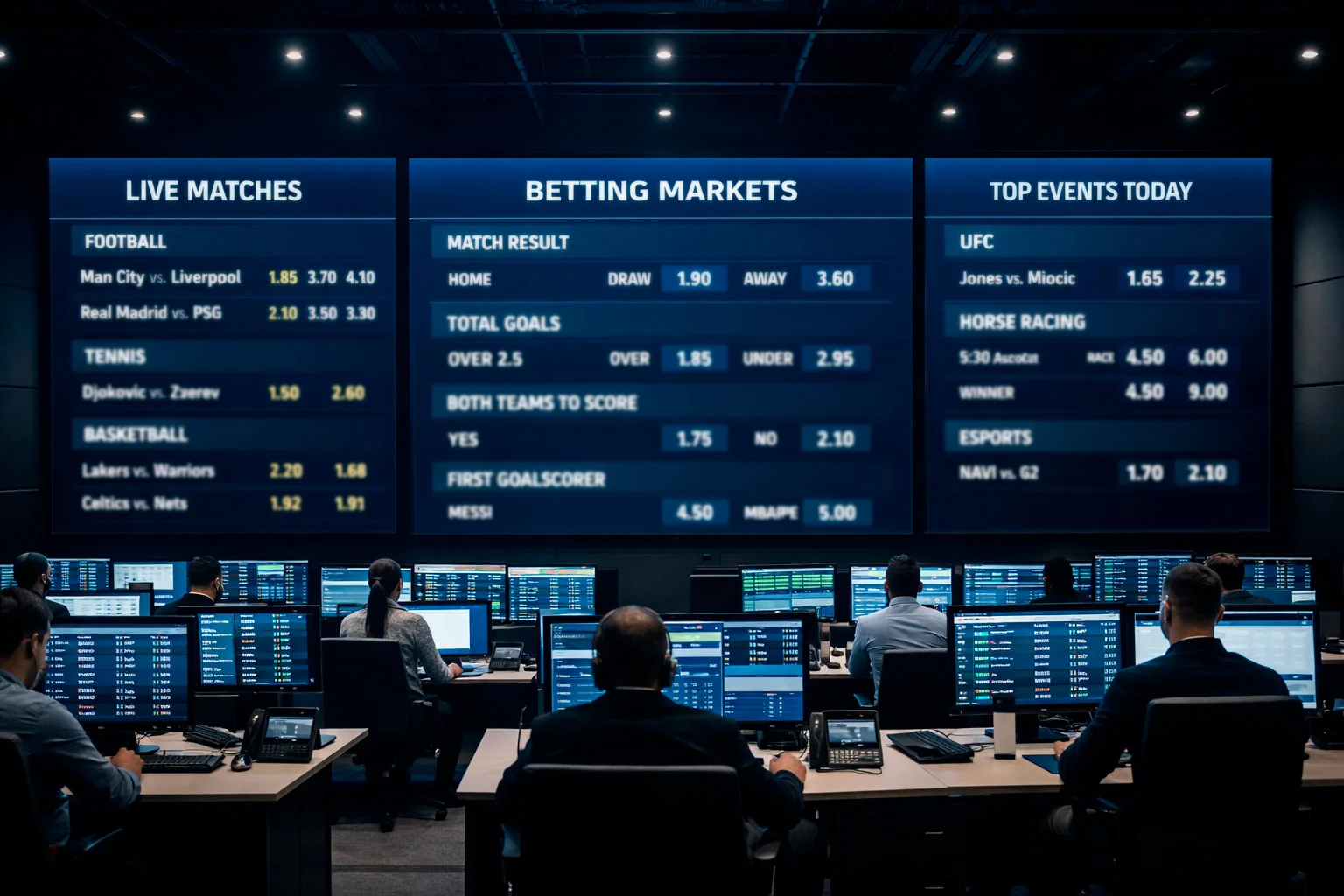
Sportsbooks are businesses built on mathematics, risk management, and information advantages. Understanding how they operate — how they set lines, manage risk, and generate profit — makes you a more informed bettor. The goal isn’t to beat the sportsbook at every turn; that’s unrealistic for most recreational bettors. The goal is understanding the game you’re playing well enough to make intelligent decisions and recognize when the house edge becomes insurmountable.
Sportsbooks don’t predict outcomes perfectly. They set lines designed to attract balanced action on both sides while building in their profit margin. When they succeed, they profit regardless of results. When action becomes lopsided, they face risk — but they have tools to manage that risk. The entire operation balances attraction of betting volume against limitation of exposure to unfavorable outcomes.
This isn’t a secret or conspiracy. Sportsbooks operate transparently within their business model. Bettors who understand this model can make more rational decisions about which bets offer reasonable value and which represent poor propositions regardless of outcome predictions.
The Vigorish: Built-In Profit Margin
The vigorish (vig, juice) represents the sportsbook’s commission built into every bet. Understanding vig reveals the mathematical challenge all bettors face.
Standard spread and total bets price both sides at -110. A bettor must risk $110 to win $100. If a sportsbook takes $110,000 on each side of a game spread, they collect $220,000 total. When the game concludes, they pay winners $210,000 ($110,000 original stake plus $100,000 profit). The remaining $10,000 represents profit regardless of which team covers.
This 4.5% built-in margin means bettors must overcome a mathematical headwind. At -110 odds, winning 50% of bets loses money over time. Break-even requires approximately 52.4% winners: for every 100 bets at -110 risking $110 each ($11,000 total), you need 52.4 wins (returning $100 profit each, totaling $5,240) to offset 47.6 losses (costing $110 each, totaling $5,236).
Moneylines on lopsided matchups embed vig differently. A -200 favorite paired with a +170 underdog doesn’t represent true probabilities; the gap between favorite and underdog prices contains the margin. Converting to implied probability: -200 implies 66.7% win probability; +170 implies 37.0%. These sum to 103.7% — the excess over 100% represents vig embedded across both sides.
Parlay odds compound the vig dramatically. Each leg of a parlay includes its own margin; combining multiple legs multiplies these margins together. A three-team parlay at true odds might pay 7:1, but sportsbook parlay odds typically pay around 6:1. The difference represents substantial additional vig beyond individual bet margins.
How Lines Get Set
Opening lines emerge from complex processes combining quantitative models and market expertise.
Power ratings form the foundation for most sportsbooks. These numerical assessments of team strength enable calculating predicted margins for any matchup. If Team A rates at 85 and Team B rates at 80, the model suggests Team A is five points better — adjust for home field and you have an opening line estimate.
Injury news, weather forecasts, and situational factors adjust model outputs. A star player’s injury might move a line several points; a weather forecast suggesting high winds affects totals; short rest or travel situations warrant adjustments. Experienced linemakers incorporate these factors based on historical impact data.
Market makers set initial lines that other sportsbooks copy or adjust. Sharp sportsbooks like Pinnacle often post lines first; other books reference these prices, adjusting slightly based on their own customer bases. This market-following creates consistent lines across the industry while allowing modest variation for bettors to exploit through line shopping.
Reverse engineering public tendencies helps sportsbooks anticipate betting patterns. If public bettors consistently favor home teams or over bets, sportsbooks might shade lines slightly to account for expected action. The line represents not just predicted outcome but predicted betting behavior.
Combine this with our guide on how to get started with sports betting for a solid foundation.
Line Movement and Market Dynamics
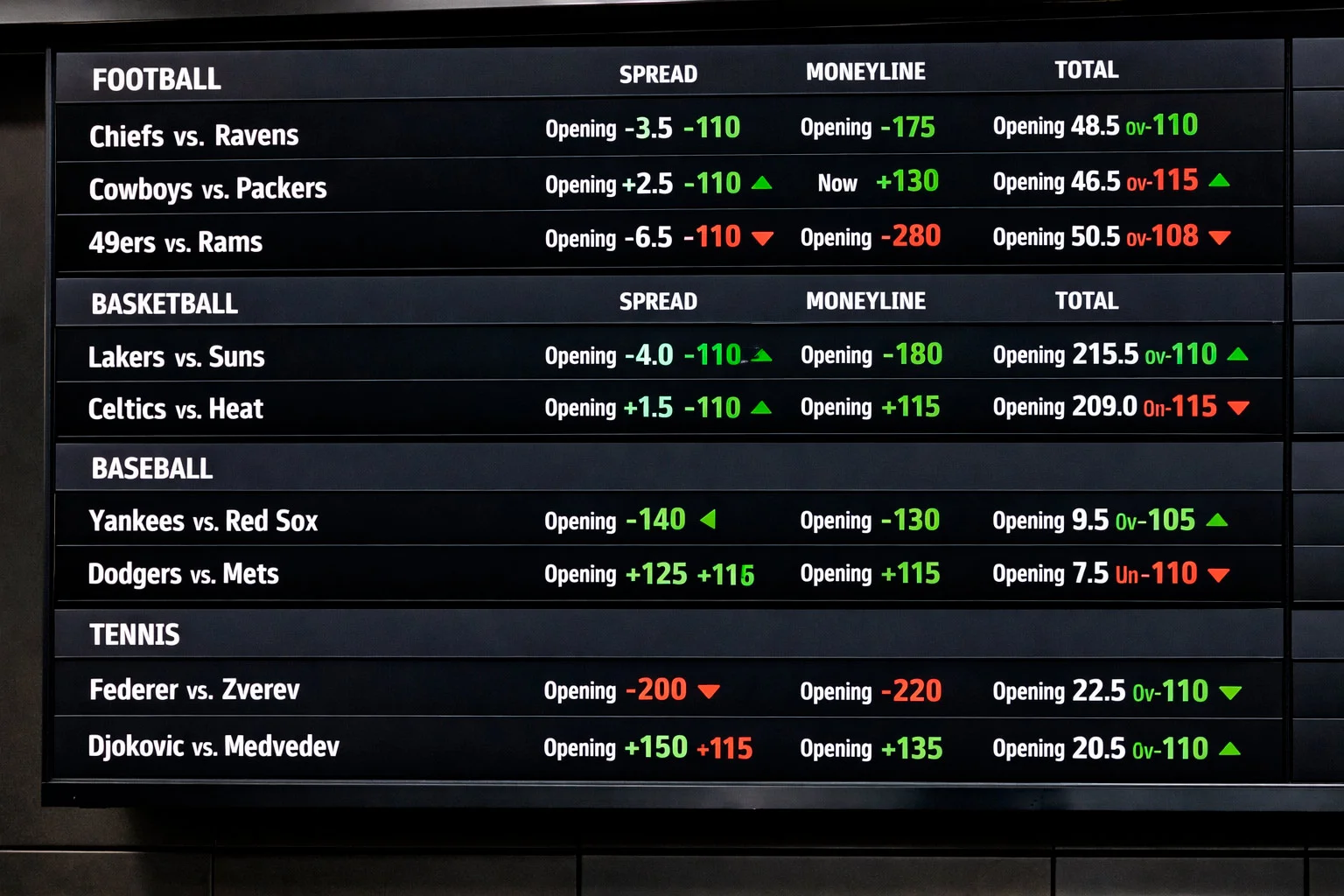
After opening, lines move based on betting action and information changes.
Balanced action represents the sportsbook’s ideal scenario. When equal money comes in on both sides, the vig guarantees profit regardless of outcome. Lines move to attract action on the under-bet side, not to predict outcomes more accurately.
Sharp action moves lines rapidly. Professional bettors with proven track records receive respect; when sharps bet one side, sportsbooks move lines rather than simply accepting risk. Early line movement often reflects sharp betting; later movement might represent public money.
News-driven movement responds to information changes. Injury announcements, lineup changes, weather updates, and other developments move lines as sportsbooks and bettors update their assessments. Breaking news creates brief windows where lines haven’t fully adjusted — opportunities for bettors who process information quickly.
Steam moves occur when coordinated betting (organized groups hitting multiple sportsbooks simultaneously) forces rapid line changes across the market. Steam indicates sharp money concentrated on one side; following steam can capture value if you’re fast enough, though sportsbooks increasingly limit suspected steam followers.
Closing lines represent markets’ final assessment before events begin. Research suggests closing lines are highly efficient — they incorporate all available information and betting action into prices that closely reflect true probabilities. Beating the closing line consistently indicates genuine betting skill.
Risk Management and Liability
Sportsbooks employ sophisticated risk management to limit exposure to adverse outcomes.
Maximum bet limits control how much sportsbooks accept on single wagers. Higher limits on liquid markets (NFL spreads, major soccer matches) reflect confidence in line accuracy; lower limits on props, smaller leagues, or new lines protect against exploitation. Limits also vary by bettor — proven winners face stricter limits than recreational players.
Account restrictions target sharp bettors whose continued action threatens sportsbook profits. Rather than refusing business outright, sportsbooks often limit winning players to minimal stakes, effectively ending their ability to bet meaningfully. This practice, while frustrating for skilled bettors, represents rational business protection for sportsbooks.
Liability management involves monitoring total exposure by outcome. If a sportsbook has accepted $1 million on one side of a game and only $400,000 on the other, they face $600,000 liability if the heavily-bet side wins. They might move the line to attract opposite-side action, lay off risk with other sportsbooks, or simply accept the exposure depending on their confidence in the line.
Multiple sportsbook networks enable risk distribution. Large operators can offset positions across different brands or partner books, spreading risk that would be dangerous concentrated in single entities. This network effect enables accepting higher limits while managing downside.
What This Means for Bettors
Understanding sportsbook operations informs practical betting decisions.
The vig creates mathematical headwind that casual bettors cannot overcome through luck alone. Long-term profitability requires either identifying genuine edge or accepting that you’re paying for entertainment. There’s no shame in the latter — most gamblers are recreational — but honesty about expectations prevents disappointment.
Line shopping across multiple sportsbooks captures value within the system. A half-point better spread or slightly better moneyline odds reduces the vig you pay. Over large bet volumes, consistently finding better prices meaningfully impacts results.
Early lines offer more opportunity than heavily-bet closing lines. Books know more when they’ve received extensive action; early lines reflect more uncertainty. Sharp bettors often target early lines where inefficiencies are greatest.
Props and exotic markets carry higher margins than standard bets. Sportsbooks embed more vig in markets with less betting volume and greater pricing uncertainty. The entertainment value of creative props comes at mathematical cost.
Winning consistently leads to restrictions. Bettors who develop genuine edge eventually face limits that constrain their betting. This reality means very few people can sustain professional sports betting as primary income; the marketplace literally won’t allow enough volume.

The House Edge in Perspective
The sportsbook edge is smaller than most casino games but still substantial over time.
Standard -110 bets carry approximately 4.5% theoretical house edge. Compare this to slot machines (5-15% edge), roulette (2.7-5.3% edge), or blackjack with perfect strategy (0.5% edge). Sports betting edge is manageable but not insignificant.
Reduced juice options lower the vig. Some sportsbooks offer -105 odds rather than standard -110; others go even lower for promotional periods. Seeking reduced juice meaningfully improves expected outcomes.
Parlay vig compounds the challenge. What seems like exciting potential payouts actually represents dramatically increased house edge. Recreational parlay betting is entertainment; serious betting generally avoids multi-leg parlays.
Volume amplifies edge impact. A 4.5% edge matters little on occasional bets but devastates bankrolls through high-volume betting without genuine skill. Betting less rather than more often represents correct strategy for recreational bettors.
Understanding how sportsbooks operate doesn’t guarantee profitable betting — the business model is designed to prevent that for most participants. However, informed bettors make better decisions about when, where, and how much to bet. Knowledge of the game you’re playing beats ignorance, even if the game itself favors the house.
Understand the house edge from our expert wagering hub.
