
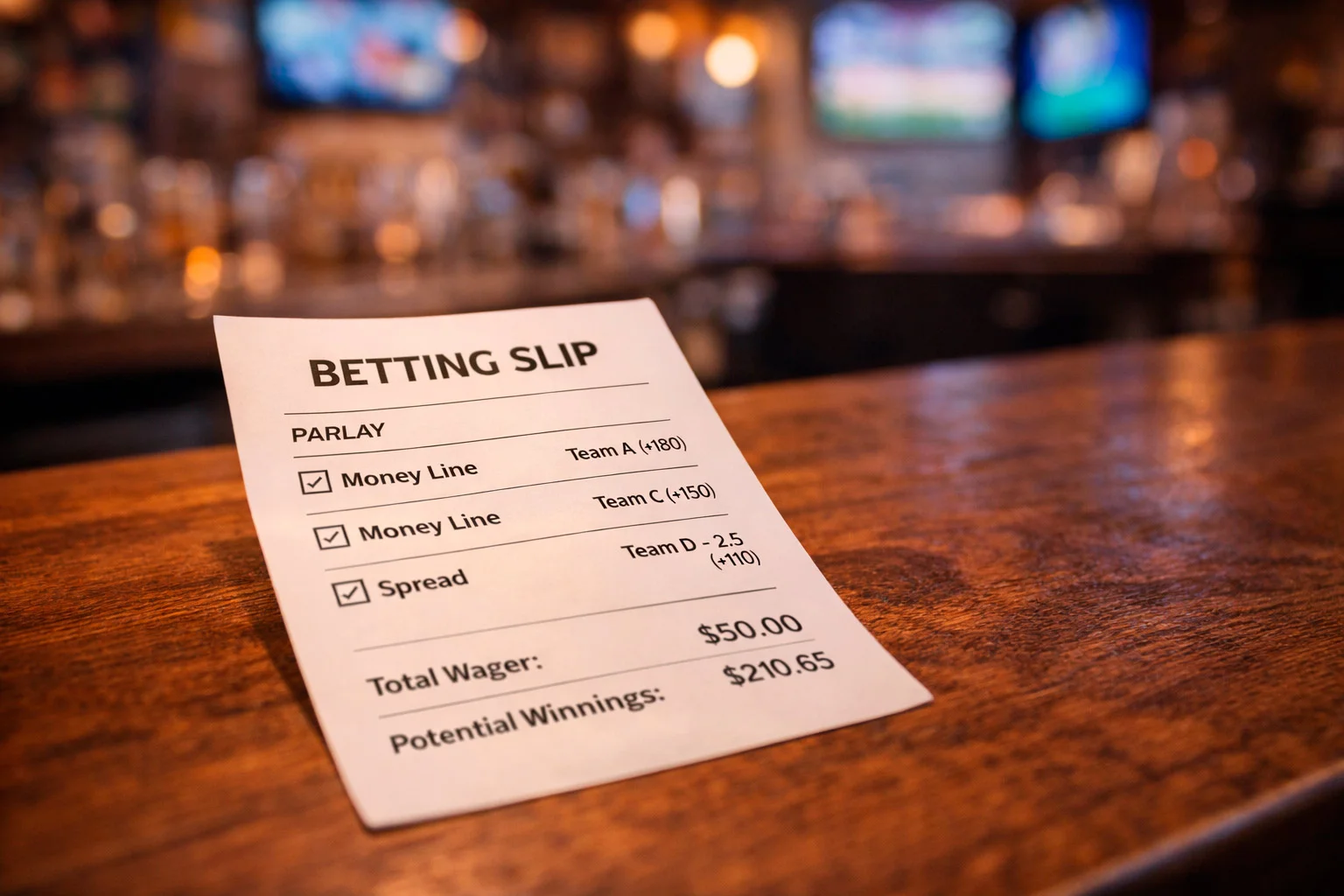
Parlay betting represents sports wagering at its most seductive. The premise is simple: combine multiple selections into a single bet, and if every leg wins, your payout multiplies dramatically. A $20 wager that would return modest profit on individual games can suddenly pay hundreds or even thousands of dollars when parlayed together. This mathematical magic explains why parlays dominate recreational betting conversation and why sportsbooks love them almost as much as bettors do.
The catch — and there’s always a catch — is that every leg must win. A single loss destroys the entire ticket regardless of how the other selections performed. Bet five games, nail four correctly, and you still walk away with nothing. This all-or-nothing structure creates the volatility that makes parlays simultaneously thrilling and treacherous. Understanding how parlay math works, when parlays offer legitimate value, and when they simply donate money to sportsbooks separates informed bettors from those chasing lottery-ticket dreams.
Canadian bettors spent decades forced into parlay-only wagering through provincial lottery systems. Before Bill C-218 legalized single-game betting in August 2021, Pro-Line and similar products allowed only multi-leg wagers with notoriously poor odds. The irony isn’t lost on experienced bettors: the government-mandated betting format was precisely the structure that benefits sportsbooks most. Today’s Canadian bettors can choose between singles and parlays, making parlay betting a strategic option rather than an unfortunate necessity.
How Parlay Odds Calculate
Parlay odds multiply across each leg, creating exponentially larger payouts as you add selections. Understanding this calculation reveals both the appeal and the trap embedded in multi-leg betting.
Take a simple two-team parlay with both sides at -110 (standard spread juice). Converting to decimal odds: -110 equals 1.91. Multiply 1.91 by 1.91, and you get 3.65 — meaning a $100 wager returns $365 total ($265 profit). Compare this to betting each game separately: two $50 bets at -110, both winning, returns $195.45. The parlay pays more because both outcomes must occur, and that reduced probability justifies enhanced payout.
The math becomes more dramatic with longer parlays. A three-leg parlay at -110 each multiplies to 6.97 odds. Four legs reach 13.31. Five legs hit 25.41. A $10 wager on a five-team parlay at standard juice pays $254.10 if everything connects. Sportsbooks display these payouts prominently because they understand human psychology: large potential returns on small stakes trigger the same reward pathways that make lotteries irresistible.
However, the probability of hitting declines faster than the payout increases. Each -110 leg has roughly 47.6% probability of winning against the spread (after vigorish). Two legs together: 22.7%. Three legs: 10.8%. Four legs: 5.1%. Five legs: 2.4%. The house edge compounds with each additional selection, which is precisely why sportsbooks encourage parlay betting through promotions and prominent interface placement.
When Parlays Make Mathematical Sense
Despite their reputation as sucker bets, specific parlay applications offer legitimate value. Understanding these situations transforms parlay betting from gambling to strategy.
Correlated parlays connect outcomes that influence each other. If you believe the Buffalo Bills will dominate the Kansas City Chiefs, taking Buffalo’s spread correlates logically with the under on total points (a team dominating often means running the clock rather than trading scores). Same-game parlays formalize this concept, allowing combinations like “team wins and game stays under total” on single tickets. The correlation means hitting one leg increases probability of hitting the other, improving expected value compared to independent selections.
Plus-money underdogs in parlays amplify already-favorable odds. If you’ve identified genuine value on a +150 underdog, adding that selection to a parlay multiplies the advantage rather than diminishing it. The key is actual value — if the +150 line reflects true 35% win probability, you’re getting paid at 40% implied probability. That edge carries through parlay multiplication.
Small parlays (two or three legs) with carefully selected plus-money spots can offer better expected value than grinding individual -110 bets. The math depends on your edge: a bettor with consistent 53% success at -110 builds profit slowly on singles but might find faster growth through selective two-teamers incorporating undervalued dogs.

When Parlays Destroy Bankrolls
The majority of parlay betting falls into the category of negative expected value, often severely so. Recognizing these traps protects your bankroll from the seduction of potential big scores.
Large parlays (five or more legs) rarely make mathematical sense regardless of individual selection quality. Even if you’re an excellent handicapper hitting 55% on spread bets, a five-team parlay offers poor expected value because variance overwhelms edge over small samples. You might hit 55% over a season’s worth of individual bets but experience extended stretches without connecting five consecutive winners.
Favorite-heavy parlays compound problems. Stacking -200 and -300 moneyline favorites feels safe — these teams usually win! — but the compressed odds mean any single upset destroys tickets while winning provides modest returns. The math works against you: you’re absorbing significant risk with each leg while adding minimal payout enhancement.
Sportsbooks understand behavioral economics. They offer parlay insurance, odds boosts, and bonus promotions specifically because parlay betting generates disproportionate profits. When the house aggressively promotes a product, that’s your signal to approach cautiously. The bet365s and FanDuels of the world aren’t charities; they’re businesses optimizing revenue extraction.
Same-Game Parlays and Modern Innovations
Same-game parlays (SGPs) represent the betting industry’s fastest-growing product category. These wagers combine multiple outcomes from a single game — team spread, total points, player props — into unified tickets. The appeal is obvious: deep engagement with specific contests rather than scattered attention across many games.
SGP pricing incorporates correlation adjustments that traditional parlays don’t require. If you parlay a quarterback’s passing yards over with his team’s spread, the sportsbook recognizes these outcomes connect and adjusts odds accordingly. Sometimes these adjustments are fair; often they’re aggressive. Comparing SGP pricing across multiple sportsbooks reveals which operators offer better value on correlated combinations.
The entertainment value of same-game parlays shouldn’t be dismissed. Watching a single game with a complex ticket creates engagement that scattered individual bets don’t replicate. If you’re betting for entertainment and accept the mathematical disadvantage, SGPs deliver concentrated excitement. The problem emerges when entertainment bets become strategy — when you convince yourself that SGP volume will eventually produce profit.
Player prop SGPs have become particularly popular. Combining “Player A over rushing yards” with “Player B over receptions” with “Team C to win” creates personalized narratives around games. These tickets feel more skillful than random parlays because they require game-specific analysis. Whether that perceived skill translates to actual edge depends entirely on your ability to identify mispriced props and correlations the sportsbook undervalues.
Building a Parlay Strategy
Successful parlay betting requires discipline that recreational bettors rarely maintain. The following principles separate strategic parlay use from bankroll destruction.
Keep parlays small. Two and three-leg combinations offer reasonable hit rates while still providing enhanced payouts. As legs increase, variance overwhelms any edge you might possess. Professional bettors rarely touch four-plus leg parlays except as occasional lottery tickets with minimal stakes.
Prioritize plus-money legs. Parlay math favors combining underdog selections rather than stacking favorites. If you’re going to parlay, make each leg something that offers standalone value rather than using parlays to manufacture excitement from boring favorites.
Limit parlay betting to a small percentage of overall action. Even sophisticated bettors who identify legitimate parlay value should cap multi-leg wagers at 10-20% of total betting volume. The variance inherent in parlays requires extensive single-bet volume to verify whether your edge is real or illusory.
Shop parlay odds across sportsbooks. Different operators offer different parlay payouts on identical selections. The difference between 6.0 and 6.5 on a three-teamer represents significant expected value over time. Ontario bettors with access to dozens of licensed sportsbooks have particular advantage here.
Track parlay results separately from singles. Many bettors convince themselves they’re profitable parlay players based on memorable wins while forgetting the steady losses between. Documenting every parlay ticket reveals whether your parlay strategy actually works or whether you’re funding sportsbook profits through confirmation bias.
For more specific outcomes, see our guide on prop betting in Canada.

The Psychological Trap
Parlays exploit human cognitive biases more effectively than any other bet type. Understanding these psychological vulnerabilities helps resist their pull.
Availability heuristic makes parlay wins memorable while losses blur together. The friend who hit a seven-teamer for $5,000 tells that story at every barbecue; nobody discusses the hundred failed tickets that preceded it. These visible wins create false impressions about parlay profitability.
Near-miss psychology keeps bettors returning. Going four-for-five on a five-leg parlay feels like almost winning rather than losing. The brain registers near-misses similarly to actual wins, triggering continued betting despite negative outcomes. Sportsbooks design interfaces to emphasize these near-misses, showing which legs hit before revealing the one that cost you.
Small-stakes, big-payout framing makes losses feel trivial. Dropping $10 on a longshot parlay doesn’t trigger the loss aversion that a $100 single bet might. But ten $10 parlays that lose equal the same hundred dollars, just spread across multiple small disappointments rather than one clear loss.
The path forward combines awareness with restraint. Parlays aren’t inherently evil — they’re tools with specific applications. Use them strategically in limited situations where correlation or plus-money combinations offer genuine value. Avoid them as primary betting strategy, as entertainment-disguised-as-investment, or as attempted quick fixes for losing bankrolls. The Canadian bettor who treats parlays as occasional spice rather than main course positions themselves for sustainable engagement with sports betting’s most seductive product.
Multiply your odds on our accumulator betting portal.
