

Tennis provides exceptional betting opportunities throughout the calendar year. While team sports have offseasons, tennis operates nearly continuously — from the Australian Open in January through various ATP and WTA events culminating in year-end championships. This constant action, combined with the sport’s one-on-one format and dramatic momentum swings, makes tennis particularly compelling for bettors seeking individual competition without the complexity of team dynamics.
Canadian tennis has experienced a remarkable rise, with Félix Auger-Aliassime, Denis Shapovalov, and Bianca Andreescu becoming household names. The National Bank Open (formerly the Rogers Cup) brings elite tennis to Montreal and Toronto alternating years, giving Canadian fans direct access to world-class competition. This domestic connection, combined with extensive media coverage of Grand Slam events, has elevated tennis betting interest across the country.
The sport’s structure — clear winners and losers with no ties, multiple sets creating betting opportunities within matches, and frequent live betting swings — creates a betting environment distinct from team sports. Understanding tennis-specific markets, surface and matchup analysis, and live betting dynamics enables sophisticated engagement with one of betting’s most dynamic offerings.
Tennis Betting Markets Explained
Tennis offers diverse betting formats beyond simple match winners, each providing different risk-reward profiles and analytical requirements.
Moneyline betting predicts the match winner outright. Since tennis matches must produce a winner (no draws), moneyline betting offers clean two-way propositions. Heavy favorites carry steep negative odds (perhaps -400 for a top-10 player against a qualifier), while underdogs offer plus-money returns. The challenge with tennis moneylines: favorites win frequently, but their short odds require high accuracy to profit.
Set betting predicts the exact set score. In best-of-three matches, options include 2-0 or 2-1 for either player. Best-of-five Grand Slam matches expand possibilities: 3-0, 3-1, or 3-2 for each player. Set betting pays significantly better than moneylines because it requires more precise prediction. A heavy favorite might be -300 on the moneyline but +140 to win in straight sets, providing better value for confident predictions.
Game handicaps level the playing field by assigning virtual game advantages or deficits. If Player A is -4.5 games against Player B, Player A must win by five or more games across all sets for handicap bets to cash. This creates more balanced odds between mismatched opponents, similar to point spreads in basketball or football.
Total games (over/under) betting predicts whether matches will produce more or fewer games than a specified line. A match lined at 22.5 games pays over if the combined game count exceeds that number, under if it falls below. Totals reward understanding of serving strength, returning ability, and likely match competitiveness rather than predicting winners.
Set totals work similarly but focus on set count. A best-of-three match might be lined at 2.5 sets — over hits if the match goes three sets, under hits if someone wins in straight sets. This market distills matches to single questions: will the losing player win a set?
Grand Slam Betting Opportunities
The four Grand Slam tournaments — Australian Open, French Open, Wimbledon, and US Open — attract the most betting attention and offer the deepest markets.
The Australian Open in January kicks off the tennis season from Melbourne. Hard courts favor powerful baseliners, though the extreme heat sometimes affecting play creates unpredictable elements. The tournament’s position at the season’s start means players return from offseason with varying form levels, creating uncertainty that sometimes produces longer odds on genuine contenders.
The French Open at Roland-Garros features clay courts that dramatically alter play. Clay slows the ball and produces high bounces, favoring patient baseliners over serve-and-volley attackers. Rafael Nadal’s historic dominance demonstrated how surface specialists gain massive advantages. Clay court specialists sometimes offer value when their surface expertise gets underrated against higher-ranked hard court players.
Wimbledon’s grass courts at the All England Club produce the fastest playing conditions on tour. Big servers gain advantages as low bounces and quick points favor aggressive play. Grass court form often diverges from rankings based on other surfaces — players comfortable on grass sometimes outperform their overall positioning.
The US Open concludes the Grand Slam season from Flushing Meadows on hard courts. Late-summer New York conditions, evening sessions under lights, and raucous crowds create unique atmospheres. Fitness matters after a long season; players carrying fatigue sometimes underperform their spring form levels.
Outright tournament betting challenges bettors to pick champions from fields of 128 players. The difficulty produces attractive odds — even strong favorites might price at +300 to +500 — but single-elimination formats mean one bad day eliminates contenders regardless of overall ability.

Surface and Matchup Analysis
Tennis surfaces fundamentally alter play, making surface-specific analysis essential for informed betting.
Hard courts (Australian Open, US Open, most ATP/WTA events) produce medium-paced play favoring all-around players. Power and athleticism matter, but pure baseliners and aggressive players both succeed. Hard court rankings most closely reflect overall tour strength since most tournaments use this surface.
Clay courts (French Open, spring European season) slow play dramatically. Long rallies reward patience, consistency, and physical endurance. Big servers lose advantage as receivers have more time to return. Clay specialists sometimes offer substantial value when facing higher-ranked opponents inexperienced on the surface.
Grass courts (Wimbledon, brief pre-Wimbledon season) produce fast, low-bouncing conditions favoring aggressive play. Serve-and-volley tactics work better than on other surfaces. Players with limited grass experience often struggle despite strong hard court results.
Indoor hard courts (late-season events) play faster than outdoor hard courts without wind or weather variables. Big servers gain advantages; returning becomes more difficult. Players preferring fast conditions often see form improvements during the indoor season.
Matchup analysis extends beyond surface to playing style interactions. A dominant server facing an elite returner creates tension that might extend matches (over on games) or produce momentum swings. Aggressive baseliners facing defensive counterpunchers create specific dynamics where either style might prevail depending on day-to-day execution.
Live Betting Dynamics
Tennis provides exceptional live betting opportunities due to its scoring structure and momentum swings.
Momentum shifts dramatically within tennis matches. A player dominating 5-1 might lose focus and allow the opponent back into the set. Someone trailing badly might find form and reel off consecutive games. These swings create live betting value when odds overreact to current game states.
Between-set betting allows reassessment after each set concludes. A player who lost the first set but competed well might offer value for remaining sets. Conversely, a dominating player showing signs of physical distress might become worth fading. The natural pauses enable thoughtful live betting rather than split-second reactions.
Serve game betting focuses on individual service games. Can a player hold serve? Will there be a break in the next game? These micro-bets settle quickly and reward understanding of serving patterns and current momentum. Players under pressure sometimes falter on serve; players finding rhythm become difficult to break.
Set winner betting during sets allows positioning based on current play. If Player A leads 4-2 but Player B is clearly playing better, backing Player B for the set might capture odds that overweight the scoreboard rather than the court dynamics.
In-match retirements create live betting considerations. If a player appears injured, their odds lengthen dramatically — sometimes offering value if the injury seems minor, sometimes warranting backing the opponent if the injury appears serious. Reading physical states becomes a live betting skill.
Analyzing Tennis Players
Successful tennis betting requires evaluating factors that predict match outcomes in specific contexts.
Ranking provides baseline ability assessment but doesn’t account for surface preferences, current form, or matchup dynamics. A player ranked 50th on clay might play like a top-20 player on grass (or vice versa). Rankings serve as starting points, not conclusions.
Recent form matters more than season-long statistics for individual match prediction. A player entering a tournament off three consecutive losses likely performs below their ranking suggests. Someone riding a hot streak might exceed expectations. Form windows of 3-6 matches often prove more predictive than annual statistics.
Head-to-head records reveal stylistic matchup patterns. Some players consistently beat opponents they “should” lose to based on rankings; others struggle against specific styles despite overall superior ability. Historical matchups, especially on similar surfaces, provide valuable context.
Physical condition affects tennis performance significantly. Players returning from injury layoffs often need multiple matches to regain match sharpness. Those playing consecutive weeks of tournaments may show fatigue effects. Monitoring scheduling and physical status improves prediction accuracy.
Motivation varies by tournament and situation. Players prioritizing Grand Slam preparation might underperform at interim events. Those fighting for ranking positions or tour finals qualification bring extra intensity. Understanding stakes for specific players contextualizes expected effort levels.
Canadian Tennis Betting Interests
Canadian tennis fans enjoy particular betting opportunities around domestic players and events.
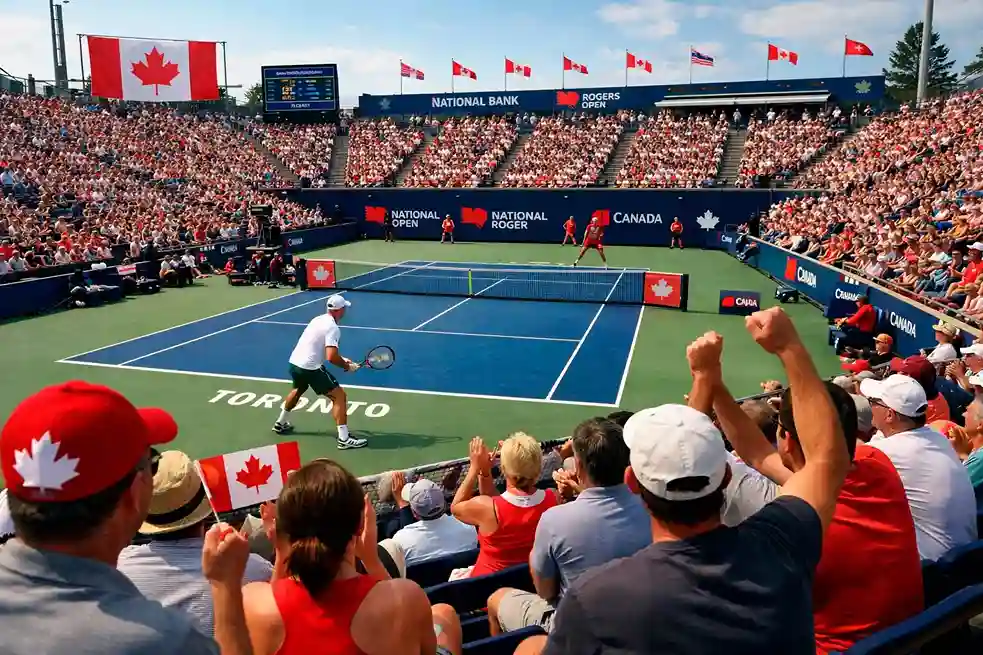
The National Bank Open brings elite tennis to Canada each summer, with the men’s and women’s events alternating between Toronto and Montreal. Home crowd support provides potential advantages for Canadian players, and the tournament attracts strong fields as US Open preparation. Betting markets for this event receive significant Canadian attention.
Canadian players competing internationally create rooting interests beyond casual viewership. Félix Auger-Aliassime, Denis Shapovalov, Bianca Andreescu, and Leylah Fernandez generate substantial betting interest from Canadian markets. Their matches often feature in promotional offerings from sportsbooks targeting Canadian bettors.
Time zone considerations affect betting engagement. Australian Open matches often occur overnight Eastern time, while European clay court season matches air during morning hours. Wimbledon and French Open afternoon sessions align reasonably with Canadian schedules. US Open evening sessions provide prime-time Eastern viewing. Planning betting engagement around schedule realities improves experience.
Avoiding Common Tennis Betting Mistakes
Certain errors repeatedly trap tennis bettors. Recognizing patterns improves results.
Backing heavy favorites at short odds produces long-term losses despite frequent wins. A -400 favorite must win 80% of matches just to break even. Tennis upsets occur often enough that consistently backing steep favorites guarantees negative returns. Seeking value at plus-money odds or through alternative markets produces better outcomes.
Ignoring surface context misprices matchups. Backing hard-court specialists on clay, or grass court strugglers at Wimbledon, ignores information that dramatically affects outcomes. Surface-specific analysis should precede every tennis bet.
Overreacting to recent results creates recency bias. A player who lost their last match might have faced an exceptionally tough opponent; someone on a winning streak might have benefited from easy draws. Contextualizing recent results rather than accepting them at face value improves analysis.
Underestimating live betting variance leads to overcommitment. Tennis momentum swings create emotional reactions during matches. Chasing losses through progressively larger live bets during matches produces bankroll damage. Disciplined unit sizing matters especially during the high-emotion environment of live tennis betting.
Ignoring retirement rules costs money during injury situations. Sportsbook policies vary — some void bets if players retire before completing matches; others settle based on retirement timing. Understanding specific book policies before betting injured or at-risk players prevents unpleasant surprises.
If you prefer the greens, check out golf betting in Canada.
Building Tennis Betting Expertise
Sustainable tennis betting requires developing specialized knowledge over time.
Follow specific tours or surfaces rather than trying to cover everything. Deep expertise in WTA tennis, ATP clay season, or Grand Slam events produces better predictions than shallow knowledge across all tennis. Specialization enables competitive advantage.
Track betting results by market type and situation. Perhaps you excel at set betting but struggle with moneylines; maybe your Grand Slam analysis outperforms ATP 500 event predictions. Data reveals patterns that guide strategic focus.
Watch tennis actively rather than just following scores. Visual observation reveals form details — movement quality, serving rhythm, mental states — that statistics don’t capture. Informed live betting particularly rewards consistent viewing.
Build understanding of player tendencies and matchup patterns. Some players consistently perform in five-set matches; others fade when matches extend. Certain styles create predictable dynamics against specific opponents. Accumulated pattern recognition supports sophisticated betting decisions.
Tennis betting rewards dedicated engagement with the sport. Year-round action, diverse betting markets, and dynamic live betting opportunities create constant engagement possibilities. Canadian bettors enjoy particular connection through domestic players and the National Bank Open while accessing the full global tennis calendar through legal sportsbooks.
Master the ATP and WTA on our tennis wagering site.
