
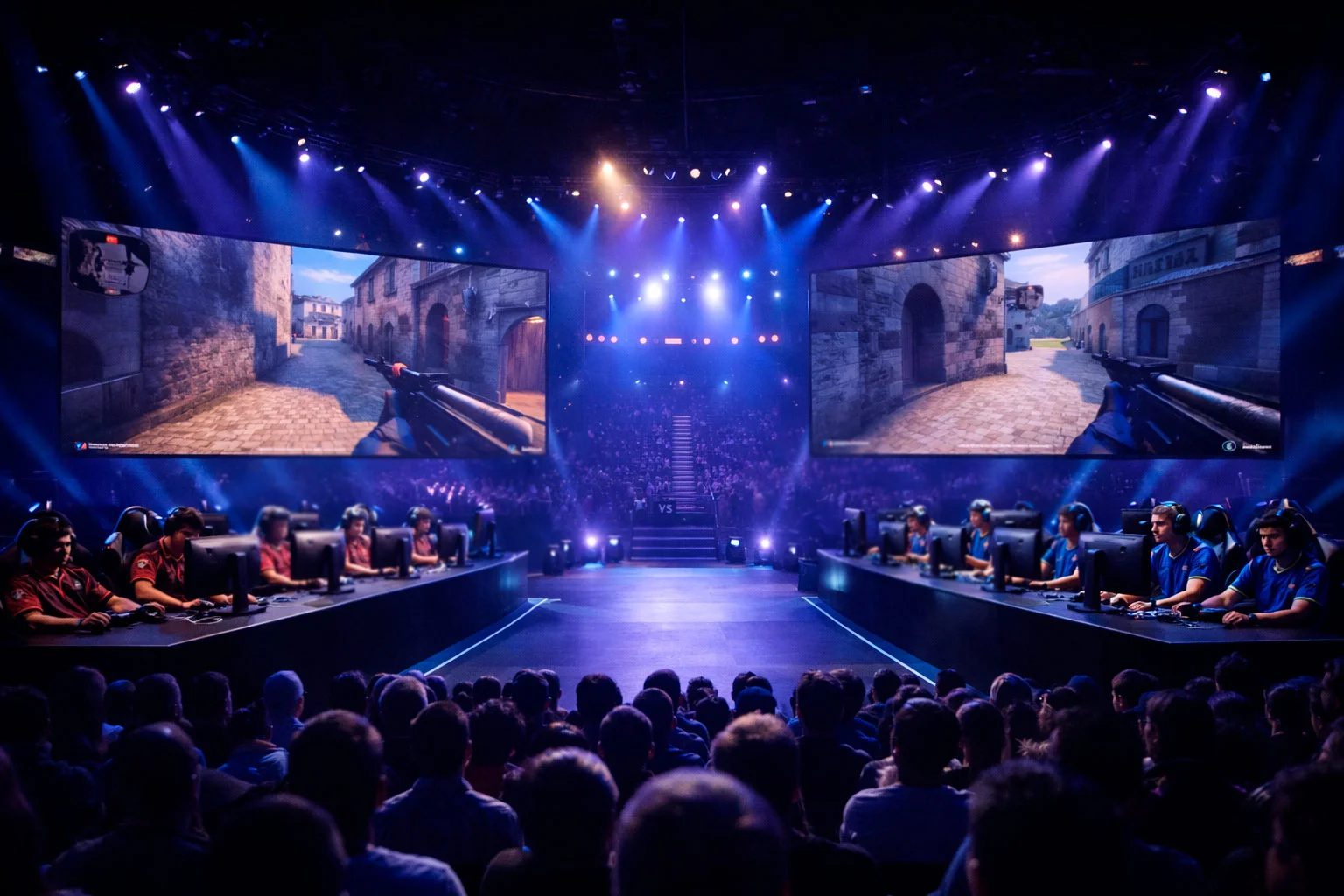
Competitive video gaming has evolved from niche hobby to global phenomenon, and betting markets have developed alongside. Canadian sportsbooks now offer extensive esports coverage, with major titles like League of Legends, Counter-Strike 2, and Dota 2 attracting betting interest comparable to traditional sports. For bettors willing to learn the unique dynamics of competitive gaming, esports presents betting opportunities unavailable elsewhere.
The esports calendar runs nearly year-round, with tournaments and league matches occurring daily across multiple titles. While traditional sports have defined seasons and offseasons, esports provides constant action — morning matches from Asian leagues, afternoon European play, evening North American competition. This continuous schedule creates betting opportunities around the clock for those comfortable with the market.
Understanding esports betting requires familiarity with both the games themselves and the competitive structures surrounding them. Unlike traditional sports where rules remain stable for decades, esports titles receive regular updates that can dramatically shift competitive dynamics. Teams rise and fall rapidly; roster changes happen frequently. This volatility creates both challenges and opportunities for informed bettors.
Major Esports Titles for Betting
Several games dominate esports betting markets, each with distinct gameplay mechanics and competitive structures.
League of Legends represents the world’s most-watched esport, with the annual World Championship drawing viewership exceeding many traditional sporting events. The game features two teams of five players controlling unique champions, working to destroy the opposing team’s base. Regional leagues operate throughout the year in North America, Europe, China, Korea, and other regions, culminating in international tournaments. The structured league format with regular schedules makes League of Legends particularly accessible for betting, with matches occurring on predictable days throughout competitive seasons.
Counter-Strike 2 (successor to CS:GO) dominates tactical shooter esports. Two teams of five alternate between attacking and defending across multiple rounds, with the first team to win 13 rounds taking the map. Professional CS2 operates through a circuit of tournaments rather than structured leagues, with events ranging from smaller regional competitions to massive international majors. The round-based format creates numerous in-game betting opportunities, as momentum can shift dramatically throughout matches.
Dota 2 shares MOBA genre characteristics with League of Legends but features different mechanics and a distinct competitive ecosystem. The International, Dota 2’s annual world championship, offers prize pools exceeding $15 million funded through community contributions. The game’s complexity and frequent balance updates create analytical challenges but also opportunities for bettors who understand meta shifts and team adaptations.
Valorant, Riot Games’ tactical shooter, has rapidly grown its competitive scene since launching in 2020. The game blends CS-style gunplay with character abilities, creating unique strategic elements. Valorant Champions Tour provides structured regional and international competition with clear tournament progressions.
Esports Betting Markets
Esports betting markets mirror traditional sports in many ways while offering game-specific options unavailable elsewhere.
Match winner (moneyline) betting predicts which team wins the overall match. Most esports matches use best-of-three or best-of-five formats, meaning teams must win multiple games/maps to claim victory. Moneyline betting on the match outcome represents the most straightforward esports wager.
Map winner betting focuses on individual games within a match. A best-of-three match contains up to three maps; you can bet on winners of specific maps rather than the overall match. This market allows more granular predictions — perhaps you expect a team to win the match but lose one map, or you see value on an underdog taking a single map despite likely losing overall.
Map handicaps function like point spreads in traditional sports. If Team A is heavily favored in a best-of-three, the handicap might be set at -1.5 maps — meaning Team A must win 2-0 for handicap bets to cash. Map handicaps create more balanced odds between mismatched opponents.
Total maps (over/under) betting predicts match length. In a best-of-three with a line of 2.5 maps, over hits if the match goes to three maps (2-1 either way), under hits if someone sweeps 2-0. This market rewards understanding of team competitiveness regardless of winner prediction.
First blood/first kill betting predicts which team scores the opening kill of a game. Some teams play aggressively early; others prefer cautious openings. Understanding team tendencies enables informed first blood predictions.
Tournament outright betting predicts championship winners before events begin. Major tournaments attract significant outright betting interest, with odds shifting throughout events as teams advance or exit.
If you like the track, read about racing betting in Canada.

Analyzing Esports Teams and Players
Successful esports betting requires understanding factors that influence competitive outcomes.
Roster stability matters enormously in team-based esports. Teams practice together for months developing coordination and strategies; roster changes disrupt this preparation. A team that just replaced a player often needs weeks to integrate the new member, during which performance typically suffers. Following roster news and understanding its impact on team cohesion provides analytical edge.
Recent form indicates current performance level, but esports form can shift quickly. A team dominating last month might struggle after a balance patch changes the game meta. Evaluating form requires contextualizing results within game version and competitive context.
Head-to-head records reveal stylistic matchups. Some teams consistently beat specific opponents regardless of overall rankings. Perhaps their playstyle counters the opponent’s approach, or psychological factors influence performance. Historical matchup data informs predictions beyond simple ranking comparisons.
Map/champion pools affect matchup dynamics. In CS2, teams have preferred maps where they perform best; map veto processes determine which maps get played. A team with a limited map pool might struggle if opponents ban their best maps. In MOBAs, champion/hero pools and draft phase execution significantly impact outcomes.
Patch timing creates uncertainty periods. When games receive significant updates, previous form becomes less predictive as teams adapt to new balance. Some teams adapt quickly to patches; others struggle. Understanding which teams handle change well provides edge during transitional periods.
Live Betting in Esports
Esports provides exceptional live betting opportunities due to rapid momentum shifts and granular in-game events.
Round-by-round betting in CS2 allows wagering on individual round outcomes. Economic situations (which weapons teams can afford) and momentum swings create constantly shifting probabilities. Observant bettors can identify situations where live odds don’t fully reflect current game states.
Objective betting in MOBAs focuses on in-game events rather than match outcomes. Which team kills the first dragon or Baron in League of Legends? Which team destroys the first tower? These micro-markets settle within games rather than requiring full match completion.
Live match winner odds shift dramatically based on in-game situations. A team falling behind early might see their odds lengthen significantly; if they stabilize and mount a comeback, those extended odds offered value. Understanding game flow and realistic comeback potential enables live betting edge.
Stream delay considerations affect live betting differently than traditional sports. Esports broadcasts typically include 30-second to several-minute delays; live odds reflect broadcast state rather than actual game state. This delay creates different dynamics than live betting on physical sports with minimal broadcast delay.
Esports Betting Challenges
Several factors make esports betting uniquely challenging compared to traditional sports.
Information asymmetry favors insiders significantly. Team practice results, internal conflicts, motivation levels, and health issues affect performance but rarely become public. Connected bettors with access to team information hold substantial advantages over public bettors relying on publicly available data.
Game updates constantly shift competitive dynamics. A champion that dominated last patch might become irrelevant after nerfs; a previously weak strategy might become optimal after buffs. Staying current on patch notes and their competitive implications requires ongoing attention that casual bettors may not invest.
Match integrity concerns exist in esports, particularly at lower competitive tiers. While major leagues implement integrity monitoring, smaller tournaments and regional competitions have experienced match-fixing scandals. Focusing betting activity on major, well-monitored competitions reduces exposure to integrity issues.
Limited historical data challenges statistical modeling. Teams disband, reform, and shuffle rosters frequently; players career spans are often short. The historical dataset for any specific team-versus-team matchup is typically thin, making statistical projections less reliable than in established traditional sports.
Young demographics of players and organizations create volatility. Esports players are often teenagers or young adults; organizations may lack experienced management. This youth brings roster instability, inconsistent performance under pressure, and organizational decisions that wouldn’t occur in mature sports industries.
Building Esports Betting Knowledge
Sustainable esports betting requires dedicated learning and ongoing attention.
Watch matches actively rather than just following results. Understanding how teams actually play — their strategies, tendencies, strengths, and weaknesses — requires viewing competitive matches. Broadcasts include analytical commentary explaining game dynamics; regular viewing builds knowledge that scoreboards alone don’t provide.
Follow esports news and social media. Roster changes, team conflicts, player injuries, and organizational issues often surface on Twitter/X and esports news sites before affecting betting lines. Staying informed enables early positioning when news impacts odds.
Specialize rather than spreading attention thin. Deep expertise in one game’s competitive scene produces better predictions than shallow familiarity across many titles. Learning League of Legends’ regional leagues, team histories, and meta evolution takes significant time; attempting similar depth across five games is impractical for most bettors.
Track results by game and tournament tier. Perhaps your League of Legends analysis works well for major leagues but fails at minor tournaments. Maybe your CS2 betting excels during majors but struggles in smaller events. Understanding where your analysis succeeds guides strategic focus.
Esports betting rewards specialized knowledge and ongoing attention. For those willing to invest learning time in competitive gaming, the market offers betting opportunities distinct from traditional sports with potentially softer lines due to smaller betting pools and less mature market efficiency.
Bet on CS2, LoL, and Dota from our gaming wagering site.
